


Keep your travel bookings, boarding passes, accommodation records, card statements showing where you were, and a day-by-day log during the year you move. Start preparing 8-12 weeks before moving, and keep those records together as part of a stress-free move to another country. They give you a clear account of your travel and time in each place.
There’s plenty to organise before you leave, but a clear plan can help you keep track without turning every day into a checklist. This guide explains how to build a timeline, estimate housing, transport, food and healthcare costs, and organise practical tasks for after arrival. You’ll also learn what to check about local rules, travel documents and healthcare before leaving the Netherlands. A little preparation now can help you arrive with fewer loose ends and more time to settle in.
Key Takeaways
- Start planning 8-12 weeks ahead and use a timeline to keep travel, paperwork and packing on track.
- Build a destination-based budget by researching housing, transport, food and healthcare costs.
- Keep travel and accommodation records, card statements showing your location and a day-by-day log for the year you move.
- Before leaving, check passport validity, visa requirements and local rules, then organise key arrival tasks and digital document copies.
1. Allowing time to prepare for an international move
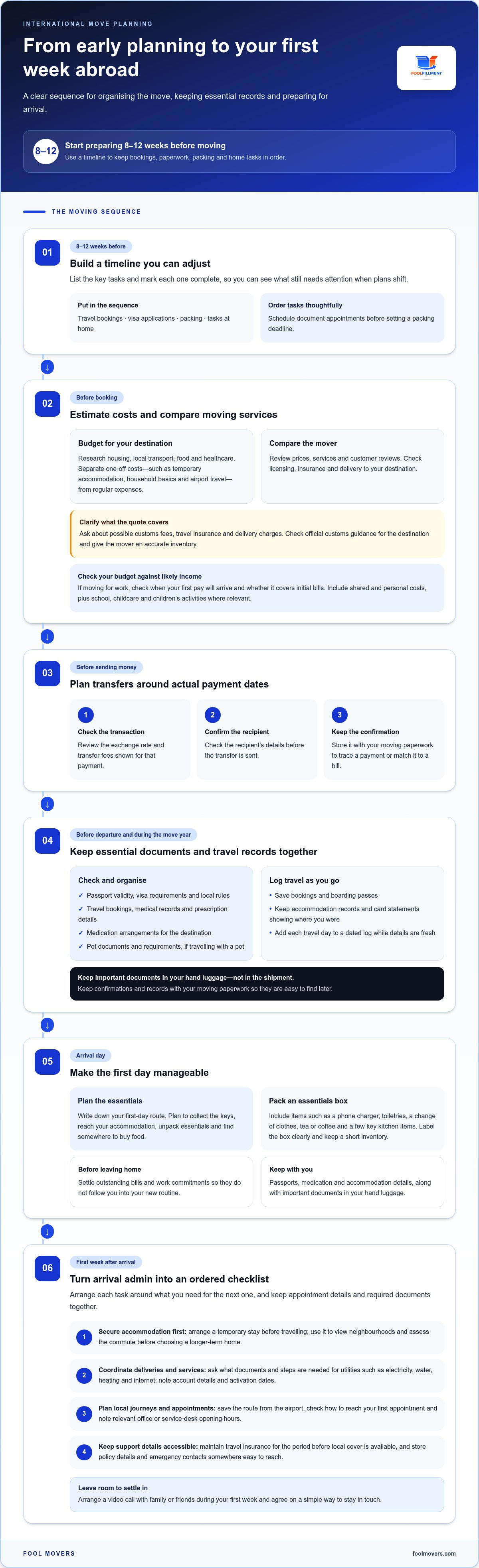
Start preparing 8-12 weeks before moving. Make a timeline for travel bookings, visa applications, packing, and tasks at home. Keep a list and mark each task complete; this shows what still needs attention when plans shift. For example, schedule document appointments before setting a packing deadline. A clear order can make an international relocation feel less overwhelming and leave space to prepare for a new culture, language, and adventure.
Choose a moving company by comparing its prices, services, and customer reviews. Check that it is licensed and insured, and ask whether it can deliver to your destination. Ask about possible customs fees, travel insurance, and delivery charges so you can understand what the quoted service covers. Shipping belongings, customs duties, and restricted items depend on your destination and what you plan to send. Check the destination’s official customs guidance before packing, and give the mover an accurate inventory so item-specific requirements can be considered.
Plan international transfers around actual payment dates, such as rent, a deposit or arrival costs. Before sending money, review the exchange rate and transfer fees shown for that transaction, then confirm the recipient’s details. Keep the confirmation with your moving paperwork. It gives you a record if you need to trace the payment or match it to a bill.
Keep a record of your travel days during the year of an international move. Save bookings, boarding passes, accommodation records and card statements that show where you were. Add each travel day to a dated log while the details are fresh. These records can help you reconstruct your time in different countries if you need to review it later.
Think of the move as a sequence of manageable tasks, not one giant job. Picture your arrival: collect the keys, reach your accommodation, unpack essentials and find somewhere to buy food. Write down your first-day route and keep important documents in your hand luggage. Before leaving, settle outstanding bills and work commitments so they don’t follow you into your new routine.
2. Estimating living costs and preparing a budget
Build a budget for your destination before booking accommodation or moving your belongings. Research rent, local transport, food and healthcare where you plan to live. Add one-off costs such as temporary accommodation, household basics and travel from the airport. Separate these from regular expenses to see what you’ll need straight away and what will continue after you settle in.
Compare your expected costs with your likely income. If you’re moving for work, check when your first pay will arrive and whether it covers your initial bills. Partners can list shared and personal expenses; families should include school arrangements, childcare and children’s activities. Ask each person in the household to name one essential expense and one flexible one. This makes trade-offs easier to discuss and can ease money worries about living abroad.
Pack an essentials box for your first day, with things you’ll need before the rest of your belongings arrive. This might include a phone charger, toiletries, a change of clothes, tea or coffee and a few key kitchen items. Label the box clearly, and keep passports, medication and accommodation details with you rather than in the shipment. A short inventory helps everyone find what they need.
Keep passports, travel bookings, medical records and prescription details together. Ask your healthcare provider which records you may need abroad, and arrange translations if necessary. Research how to obtain your regular medication at your destination. Names and availability can differ between countries, so note the active ingredient and discuss suitable alternatives with a healthcare professional.
Plan pet travel separately. Vaccination, identification, health documents and permits depend on the destination and the animal. Before booking travel, consult the destination’s official requirements and a veterinarian. Confirm which documents you need and when to arrange them.
How much does an international move from the Netherlands typically cost? The total depends on destination, distance, belongings volume, transport arrangement, and whether you need temporary storage or accommodation. Estimate each cost separately, then compare transport options against the size and timing of your move. Expats in local groups can share practical pointers about everyday costs, but base your budget on your own housing, household and employment situation.
3. Planning administrative tasks after arrival
Turn arrival paperwork into a first-week checklist, ordered by what you need for the next task. For example, arrange housing before scheduling deliveries, then set up access to local services and payment methods. Keep appointment details and required documents together in a travel folder. Name a contact for each task, such as your landlord for key collection or your employer for workplace onboarding. A clear sequence is easier to follow than a pile of reminders.
Arrange temporary accommodation before travelling, and avoid committing to a long-term rental until you know the location suits you. Ask the landlord what documents and steps are needed to set up electricity, water, heating, internet and other utilities. Add account details and activation dates to your arrival checklist. If you start with a short stay, use it to view neighbourhoods and assess the local commute before choosing a longer-term home.
Plan practical travel and admin tasks around your arrival address. Save the route from the airport, check how you’ll reach your first appointment and note the opening hours of relevant offices or service desks. Keep travel insurance in place for the period before local cover becomes available. Store policy details and emergency contacts somewhere accessible, not in a moving box. If you’re unsure what a policy covers, a specialist can explain its terms.
Make room for farewells and the emotional shift of leaving familiar people and routines. Arrange a video call with family or friends during your first week, then agree on a simple way to stay in touch. Kalervo Oberg’s four-stage model describes culture shock as beginning with a honeymoon period, followed by confusion and frustration before adjustment. Knowing that settling in can take time may help you see difficult days as part of the transition, not a personal failure.
Plan a simple routine for your first days: unpack bedding, find a nearby grocery store and take a short walk around your neighbourhood. Keep moving tasks in one checklist and update it as each delivery or appointment is completed. If anxiety or homesickness begins to affect daily life, consider seeking emotional support from a mental health professional.
4. Checking local laws and requirements
Before moving abroad, read official guidance for your destination on passport validity, visa requirements and permission to live or work there. Rules vary by country, so note which documents apply to you and when each must be ready. Read immigration documents carefully before signing. If a condition is unclear, seek qualified advice first. Checking early gives your plans a solid foundation.
Make a separate list of local rules that may affect daily life, including residence registration, healthcare cover, tax residence and driving requirements. These depend on your destination and circumstances. In many countries, the number of days you spend there is one factor in determining tax residence. Track your travel dates and learn how the destination assesses residence. Doing so can make stress-free moving to another country easier by helping you avoid assumptions about your obligations.
Keep application records organised. Save digital copies of your passport, visa documents, applications and official replies in a secure folder. Use clear file names, such as “passport” or “residence application,” and keep essential originals accessible while travelling. A separate backup can help if your phone or laptop is unavailable. An organised document system makes stress-free moving to another country easier when an appointment or official request comes up.
Build a local network before you leave. Join a community group for your destination or attend an online meetup, and ask practical questions about neighbourhoods, customs and local services. After arrival, meet people through community groups and expat meetups. Local connections can help you understand everyday routines and feel less isolated during culture shock.
A local bank account can simplify everyday payments and access to funds. Research how to open an account and which identity or residence documents the bank requires. Keep another payment method available while you complete the process, and store account details securely. Add banking to your arrival plan alongside official appointments.
Review your checklist before departure and update it as you complete each requirement. A clear record helps you focus on the rules that apply to your destination.
Fool Movers: Home Removals
Fool Movers can help move household belongings when your plans and destination are taking shape. Its Home Removals and Furniture & Other Items services suit people arranging a move with furniture or selected possessions. For a broader move, Complete Relocation Solutions may fit your needs. The focus is practical: move the belongings you want to take, while you handle arrival arrangements and local requirements.
Before arranging transport, make a simple inventory. List the furniture and other items you want to move, along with your collection and delivery locations. This gives you a clear starting point for discussing the move and deciding what to take, store or leave behind.
If moving belongings is the next task on your list, visit Fool Movers to find out more.
Make your next move a clear one
A new country becomes home through small choices after arrival: where you settle, which routines you build and which familiar belongings you bring. You don’t need to solve everything at once. Choose the next practical decision, give it your attention and take the rest in order. That steady approach is at the heart of stress-free moving to another country.
When you’re ready to plan the belongings side, Fool Movers offers Home Removals, Furniture & Other Items, and Motorcycles & Scooters. The right option depends on what you’re taking and the move you’re organising. Share the basics of your plans to start a straightforward conversation about the next step.
Contact Fool Movers about your move, and take one more task off your list. Your new chapter starts with a plan you can act on.
Frequently Asked Questions
What records should I keep in the year I move?
Keep records that help you reconstruct your travel and important moving decisions. Along with travel and accommodation details, save employment documents, lease agreements, moving invoices and confirmation emails in a dated folder. A simple day log can connect those records to your location and activities. Keep digital copies separate from original documents, and organise files by month so they’re easy to find later.
What are the steps for moving to another country from the Netherlands?
Start by choosing a destination and checking its entry, residence and work requirements. Then set a moving date, arrange travel and decide which belongings to take. Organise a place to stay, prepare a realistic budget and plan practical arrival tasks such as local transport and utilities. Before leaving, settle outstanding commitments in the Netherlands and keep key documents accessible during travel.
How do international moving companies compare, and what services should I look for?
Compare written quotes, what each service includes, customer reviews, and whether the company is licensed and insured. Check that its delivery service covers your destination and ask how it handles timing, access, and delivery updates. For moves outside the EU, clarify what customs guidance and paperwork support are available. Match the service to your belongings: a few selected items may need a different arrangement than a whole household.
What documents should I prepare before moving abroad from the Netherlands?
Prepare a valid passport and the visa or residence documents required for your destination. Gather travel confirmations, accommodation details, medical records and prescription information. If documents need translation, arrange it before departure and keep translated and original versions together. Save secure digital copies of applications and official replies as well. Make a document list for each traveller so a partner’s or child’s paperwork isn’t missed.
What are common risks when moving abroad, and how can I avoid scams and delays?
Missing documents, unclear delivery arrangements and overlooked destination rules can disrupt a move. Reduce the risk by getting service details and costs in writing, keeping payment records and checking that the mover’s business details match its quote and agreement. Don’t pay under pressure before you understand the terms. Allow time for appointments, document processing and unexpected changes to travel or delivery.
What practical checklist and timeline make an international move less stressful?
Start with a dated task list and assign each job to someone, such as you or your partner. Work backwards from departure: complete official paperwork and travel plans first, confirm accommodation and transport next, then leave packing and home handovers for later. Mark tasks as done and note dependencies, such as needing an address before arranging a local service. Review the list regularly and update dates when plans change.
Disclaimer
Website & Blog Disclaimer
Last updated: September 2026
The information published on Foolmovers.com, including articles, guides, tips, FAQs and other editorial content, is provided for general information and guidance only.
Accuracy of Information
Foolmovers makes reasonable efforts to ensure that the information published on this website is accurate and useful at the time of publication. However, information can change without notice, particularly regarding customs procedures, import and export requirements, transport regulations, documentation, taxes, duties, prices, travel restrictions and local regulations.
We therefore cannot guarantee that all information will always be complete, accurate or current.
No Professional Advice
Information published on Foolmovers.com should not be regarded as legal, tax, financial, customs, immigration or other professional advice.
Every international move is different. Requirements may depend on the countries involved, your personal circumstances, residency status, the goods being transported and current legislation.
For important decisions, you should verify the latest requirements with the appropriate authorities or a suitably qualified professional.
Customs & International Moves
Customs regulations and documentation requirements can change and may be interpreted differently by authorities in different countries.
Although Foolmovers can assist customers with transport documentation and customs procedures where applicable, information provided in our articles does not constitute a guarantee that a shipment will be accepted, cleared or exempt from duties, taxes, inspections or additional charges.
Any customs duties, taxes, government charges or third-party fees remain subject to the applicable authorities and service providers unless expressly agreed otherwise.
Prices & Costs
Any prices, rates, fees or cost estimates mentioned in our articles are provided for general guidance unless explicitly stated otherwise.
Actual transport, storage, customs and related costs may vary according to route, volume, dates, availability, fuel prices, tolls and individual circumstances.
For an accurate moving price, please request a personalised quotation from Foolmovers.
Third-Party Websites
Our articles may contain links to external websites, authorities, businesses or other third-party resources.
These links are provided for convenience and additional information. Foolmovers does not control these websites and cannot accept responsibility for their availability, accuracy, content, security or privacy practices.
The inclusion of an external link does not necessarily mean that Foolmovers endorses the organisation, service or information concerned.
Limitation of Liability
To the extent permitted by applicable law, Foolmovers cannot accept liability for losses, damages, costs, delays or other consequences resulting from reliance solely on information published in our articles, guides or other general website content.
Nothing in this disclaimer excludes or limits liability where doing so would be prohibited by applicable law.
Your Individual Move
Information found in one of our articles may not apply exactly to your situation.
If you're planning a European move, contact Foolmovers directly. We can look at your specific route, volume, dates and requirements and provide information relevant to your move.
Foolmovers
Small European Moves, Done Right.


