


Moving a whole household abroad can be costly, so consider whether shipping everything is worthwhile compared with selling items and replacing them after arrival. A smarter starting point is to choose the pieces you truly want to keep, then learn how to pack furniture for moving abroad without adding avoidable bulk or risking damage. Keep moving boxes to 20 kilograms or less to make them easier to handle.
It’s understandable to worry about the total cost. The amount you’re moving, the distance and how each piece is protected all affect the plan, so there’s no single price for every move. Taking a favourite chair, a useful bed or a family antique can be more practical than moving everything.
This guide explains how to sort and measure furniture, dismantle bulky pieces, protect delicate finishes and keep loose parts together. You’ll also learn how to weigh storage against transport. The aim is simple: keep what matters, protect it properly and avoid paying to move items you don’t need.
Key Takeaways
- Choose padding and coverings that protect delicate finishes without sticking tape or wrap directly to the surface.
- Take apart bulky furniture where practical, and keep labelled hardware with the piece it belongs to.
- Compare transport options by considering the shipment’s size, route and how much furniture you plan to take.
- Focus on the pieces you value or rely on, such as a favourite chair or a family antique, rather than packing everything by default.
How do you protect fragile items?
Match each item with padding that prevents scratches, pressure damage and movement in transit. Shipment dimensions and weight depend on the transport space; a 40-foot container has a loadable volume of 55-58 cubic metres, but that figure is not a weight limit.
-
1. Choose Protective Packing Materials
Sort packing materials by the item’s shape and surface before wrapping. Use clean furniture blankets or padding for large, fragile pieces, and cushioning inside sturdy boxes for smaller belongings. Choose boxes that fit their contents, leaving room for protective material without creating a loose, shifting load. Keep each moving box at or below 20 kilograms. International furniture-shipping boxes should weigh no more than 30 pounds (13.6 kilograms).
-
2. Protect Furniture Surfaces
Cover polished, painted, leather and delicate wood surfaces with a soft protective layer before securing anything. Don’t apply packing tape or bubble wrap directly to these finishes, as adhesive or friction can leave marks. Wrap protruding corners and legs separately, then pad the whole piece. Make sure straps, tape and screws can’t press into the surface during handling or stacking.
-
3. Pack Upholstered Furniture and Mattresses
Pack upholstery only when it’s dry. Don’t tightly seal a damp sofa or chair in plastic, as this can trap moisture against the fabric. Use a sturdy cover for a two- or three-seater sofa, and add padding where the arms or feet might rub. Protect mattresses with a suitable cover and keep them flat in storage to help prevent deformation.
-
4. Protect Furniture During Sea Freight
Start with dry furniture, then protect it from dust, moisture and impacts. Secure the wrapping, but don’t seal damp upholstery in plastic. Leave space between stored pieces for airflow, and keep furniture off concrete with a barrier such as pallets or plastic. Protect exposed surfaces and openings from pests, and don’t stack heavy items on delicate or hollow furniture.
Disassembling furniture and storing loose parts
Dismantle bulky furniture only if it will make handling or storage easier. From the outset, keep every component, fastener and instruction together.
For an international move from the Netherlands, insurance cover depends on the policy terms. Check that the policy expressly covers furniture during international transit, and understand how it treats damage, exclusions and any excess.
-
Disassemble Furniture
Start with removable parts, such as table legs, bed frames and wardrobe shelves. Follow the furniture’s assembly points and use the right screwdriver or Allen key to avoid damaging fittings. Don’t force stuck joints or dismantle furniture that could become unstable. Keep panels together in their original order to make reassembly easier at your new home.
-
Store Small Parts
Put screws, bolts and other small fittings in a labelled bag for each item. Write the furniture name on the bag, then attach it securely to the matching piece or place it inside a drawer. Keep the assembly instructions with the same parts. Stretch film can hold doors, drawers and bundled components together, but don’t apply it directly to delicate finishes.
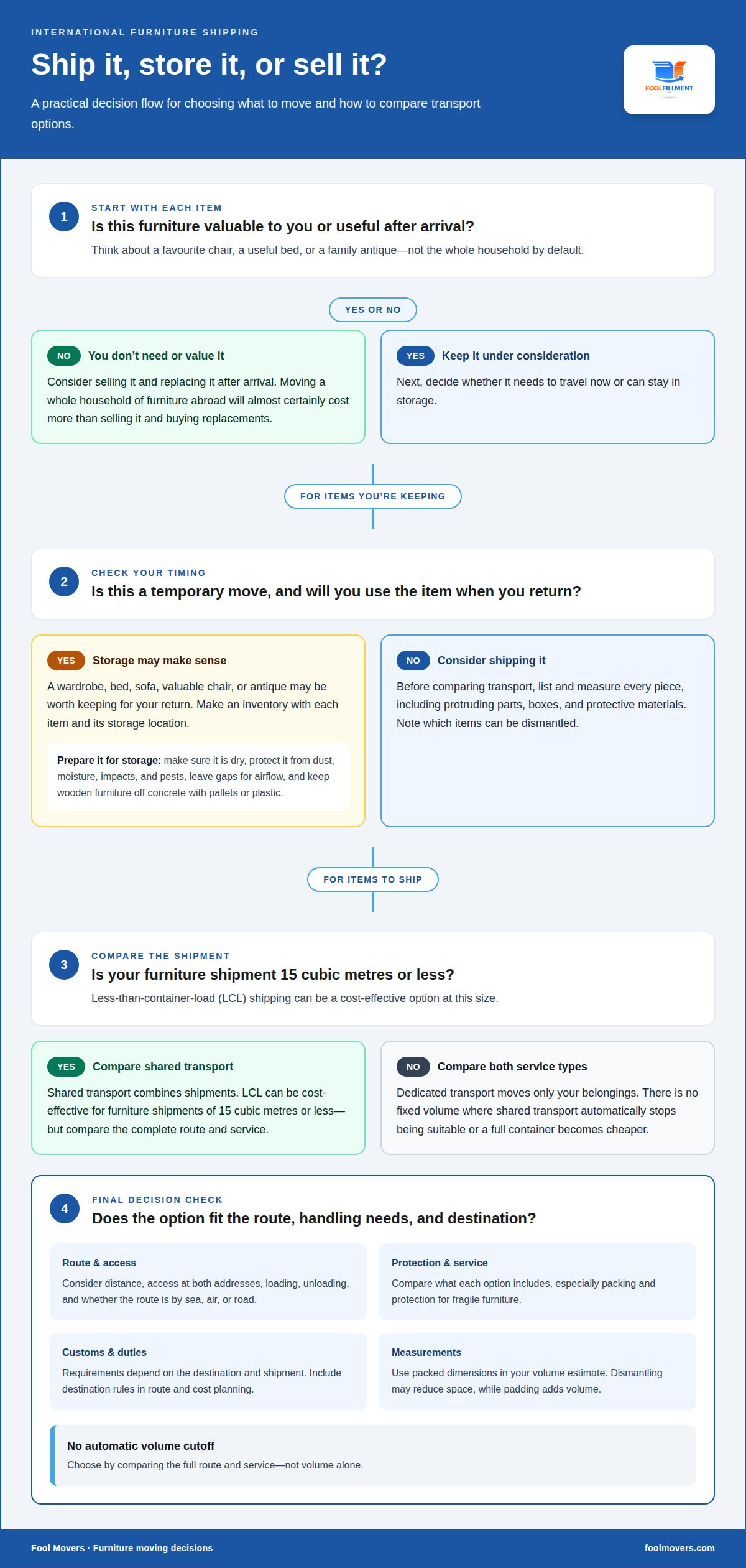
- Decide which bulky items to store during a temporary move. Keeping a wardrobe, bed or sofa may make sense if you’ll use it when you return, while shipping furniture you won’t need adds volume. Make a simple inventory of each item and its storage location. It can help you find a particular chair or bed without opening every stored bundle.
- Prepare furniture for the time it will be in storage. Make sure each piece is completely dry, then protect it from dust, moisture, impacts and pests. Choose a dry, well-ventilated space, leave gaps between items, and keep wooden furniture off concrete with pallets or plastic. Don’t stack pieces higher than you can safely lift.
Which shipping options are best for shipping furniture internationally?
Compare the shipment size, route and service type before choosing how to move your furniture. The right option depends on what you’re taking and how it needs to travel.
Customs rules and import duties depend on the destination and shipment. There’s no single answer for every move from the Netherlands, so include the destination’s requirements in your route and cost planning.
- List and measure each piece. Record the dimensions of every item, including protruding parts, and note whether it can be dismantled. A wardrobe’s packed dimensions may differ considerably from its assembled size. Include boxes and protective materials in your volume estimate, since padding takes up space too. Accurate measurements make it easier to compare transport options on the same basis.
- Compare shared and dedicated transport. Less-than-container-load shipping can be a cost-effective option for furniture shipments of 15 cubic metres or less. Dedicated transport moves only your belongings, while shared transport combines shipments. There’s no fixed volume where shared transport automatically stops being suitable or a full container becomes cheaper. Compare the complete route and service, not volume alone.
- Factor in handling and the route. Distance, access at both addresses, loading, unloading and packing all affect the plan. A dismantled bed may take up less room than an assembled frame, but it still needs careful handling. Sea, air and road transport differ in route and timing. Compare what each option includes, including protection for fragile furniture.
- Decide whether to ship or store. Moving a whole household of furniture abroad will almost certainly cost more than selling it and buying replacements after arrival. For a temporary move, storage can make sense for a valuable chair or antique. An international removal company can help plan transport for selected pieces and may offer storage solutions or recommend storage providers.
Taking selected furniture and antiques abroad
Choose the pieces worth transporting, then plan protection around each item’s shape and materials. Furniture restrictions depend on the destination country and the item; solid-wood pallets, crates or dunnage may need ISPM 15-compliant treatment and an official mark for the destination and transit route.
- Select the pieces. Make a shortlist of furniture you’ll genuinely use or value in your new home. A favourite chair, family heirloom or useful table may be worth transporting more than a roomful of replaceable items. Note each piece’s material, condition and sentimental value. This helps you focus your planning and handling on what matters most.
- Plan for special handling. Photograph each antique before packing, including existing marks and delicate details. Record its shape, materials and any loose or fragile parts in your inventory. Share these details when arranging international transport so the handling plan reflects the item. Keep the photos and inventory notes together instead of relying on memory at collection or delivery.
- Protect unusual shapes and delicate pieces. Wrap protruding parts separately, such as carved legs, handles or decorative finials. Keep each component with its matching furniture, and label the package clearly. Don’t place heavy items on delicate or hollow furniture, as pressure can crush or crack the item below. For an antique cabinet, keep the top clear rather than using it as a base for other belongings.
- Match packaging to the route. Ask an international removal company to pack selected sentimental belongings or family heirlooms for overseas transport. If using solid-wood pallets, crates or dunnage, account for the destination and transit route when planning packaging. Keep the item inventory with your move documents, and label each piece by room and destination use. That makes unloading and placement more direct.
Fool Movers: Home Removals
Fool Movers can help move selected furniture and household items when you’re relocating abroad. Its Home Removals and Furniture & Other Items services suit moves where you’re taking carefully chosen pieces rather than an entire household. This can be useful for a favourite chair, a bed, or an antique you’ve already prepared for transport.
Plan around the items you’re keeping: make an inventory, note any delicate features, and group loose parts with their furniture. Fool Movers handles small removals up to 12 m³, so the amount you’re moving is an important part of planning. For a move that needs broader coordination, Complete Relocation Solutions may fit your needs.
Contact Fool Movers to discuss moving your selected furniture abroad.
Make the next move a clear one
Your arrival plan matters as much as the journey. Decide which pieces you’ll need first, where they’ll go and who can receive them. This gives you a practical starting point for coordinating transport and settling in, rather than sorting everything out after delivery.
If you’re still working out how to pack furniture for moving abroad, turn your item list into a simple move plan. Fool Movers offers Home Removals and Furniture & Other Items for household furniture, along with Motorcycles & Scooters if your move also includes a bike. Share what you’re moving and your destination, then discuss the next steps with the team.
Contact Fool Movers about your move and take the next step with a clear plan.
Frequently Asked Questions
How much does it cost to ship furniture overseas?
The cost depends on the route, shipment size, transport type and handling needs. Fool Movers’ co-load removals start from €0.80 per kilometre, while dedicated transport starts from €1.45 per kilometre. A co-load combines shipments, while dedicated transport carries only your belongings. Compare the option that suits your furniture and destination, rather than relying on a general overseas shipping estimate.
Should I pack furniture myself?
You can pack straightforward items yourself if you have suitable materials and enough time to prepare them carefully. For a valuable antique, sentimental heirloom or furniture with delicate details, professional packing can help manage handling. Decide based on the item’s condition, shape and finish. If you pack it yourself, photograph fragile pieces before wrapping and keep an inventory of each package’s contents.
What is the most a moving box should weigh?
Keep a general moving box at or below 20 kilograms so it remains manageable to lift. International furniture-shipping boxes should weigh no more than 30 pounds, or 13.6 kilograms. Put heavy belongings in smaller boxes and lighter items in larger ones. Mark each box with its contents and destination room, making it easier to place without repeatedly lifting and opening it.
What other costs are there to consider?
Consider costs beyond transport, such as packing materials, storage, dismantling or reassembly, and handling unusual furniture. The destination can also affect paperwork and customs planning. Make a checklist: note which pieces need preparation, whether you need temporary storage and how items will be handled at each address. This gives you a clearer basis for comparing move plans.
How do I prepare and pack furniture for an international move from the Netherlands?
A practical plan for how to pack furniture for moving abroad starts with choosing what to take and recording each item’s condition. Measure furniture and doorways at both homes, then plan how bulky pieces will reach their destination rooms. Keep an inventory separate from the shipment. For moves outside the EU, include customs paperwork in your preparations and label packages clearly.
What packing materials best protect furniture during overseas shipping?
For how to pack furniture for moving abroad, match protective materials to each item’s surface and shape. Furniture blankets cushion larger pieces, while cardboard corner protectors shield exposed edges. Place clean padding between stacked components and around small decorative parts. Use a suitable cover on dry upholstery. Keep tape on the protective layer, not directly on delicate finishes.
Disclaimer
Website & Blog Disclaimer
Last updated: September 2026
The information published on Foolmovers.com, including articles, guides, tips, FAQs and other editorial content, is provided for general information and guidance only.
Accuracy of Information
Foolmovers makes reasonable efforts to ensure that the information published on this website is accurate and useful at the time of publication. However, information can change without notice, particularly regarding customs procedures, import and export requirements, transport regulations, documentation, taxes, duties, prices, travel restrictions and local regulations.
We therefore cannot guarantee that all information will always be complete, accurate or current.
No Professional Advice
Information published on Foolmovers.com should not be regarded as legal, tax, financial, customs, immigration or other professional advice.
Every international move is different. Requirements may depend on the countries involved, your personal circumstances, residency status, the goods being transported and current legislation.
For important decisions, you should verify the latest requirements with the appropriate authorities or a suitably qualified professional.
Customs & International Moves
Customs regulations and documentation requirements can change and may be interpreted differently by authorities in different countries.
Although Foolmovers can assist customers with transport documentation and customs procedures where applicable, information provided in our articles does not constitute a guarantee that a shipment will be accepted, cleared or exempt from duties, taxes, inspections or additional charges.
Any customs duties, taxes, government charges or third-party fees remain subject to the applicable authorities and service providers unless expressly agreed otherwise.
Prices & Costs
Any prices, rates, fees or cost estimates mentioned in our articles are provided for general guidance unless explicitly stated otherwise.
Actual transport, storage, customs and related costs may vary according to route, volume, dates, availability, fuel prices, tolls and individual circumstances.
For an accurate moving price, please request a personalised quotation from Foolmovers.
Third-Party Websites
Our articles may contain links to external websites, authorities, businesses or other third-party resources.
These links are provided for convenience and additional information. Foolmovers does not control these websites and cannot accept responsibility for their availability, accuracy, content, security or privacy practices.
The inclusion of an external link does not necessarily mean that Foolmovers endorses the organisation, service or information concerned.
Limitation of Liability
To the extent permitted by applicable law, Foolmovers cannot accept liability for losses, damages, costs, delays or other consequences resulting from reliance solely on information published in our articles, guides or other general website content.
Nothing in this disclaimer excludes or limits liability where doing so would be prohibited by applicable law.
Your Individual Move
Information found in one of our articles may not apply exactly to your situation.
If you're planning a European move, contact Foolmovers directly. We can look at your specific route, volume, dates and requirements and provide information relevant to your move.
Foolmovers
Small European Moves, Done Right.


