


A small shipment doesn’t automatically mean a simple price. The best way to move a few items to another country is to compare shared transport with a dedicated move, based on your shipment’s volume, route and delivery needs. Check what each option includes and how the pricing is calculated before choosing.
It makes sense to find a straightforward way to move a sofa, a few boxes or other belongings without paying for space you don’t need. The key is to choose transport that fits the shipment and understand what the quote covers. For delicate furniture, plan how each piece will be protected and handled.
This guide explains how to prepare and protect your items, compare transport options and understand a quote. You’ll also learn what to look for in a mover, so you can choose an option that fits your shipment, budget and timing.
Key Takeaways
- Compare shared-container shipping with dedicated transport by looking at shipment volume, route and delivery timing.
- Protect furniture with suitable packing, and make an inventory before it leaves.
- Choose sea, air or land transport based on the destination, the items and how quickly you need them.
- Compare minimum charges and what each quote includes to understand the full cost of moving a small shipment.
How can you ship furniture internationally?
For the best way to move a few items to another country, match the transport method to your shipment’s volume, route and deadline. Shared-container shipping can suit furniture when you don’t need a container to yourself.
-
Using Shared-Container Shipping
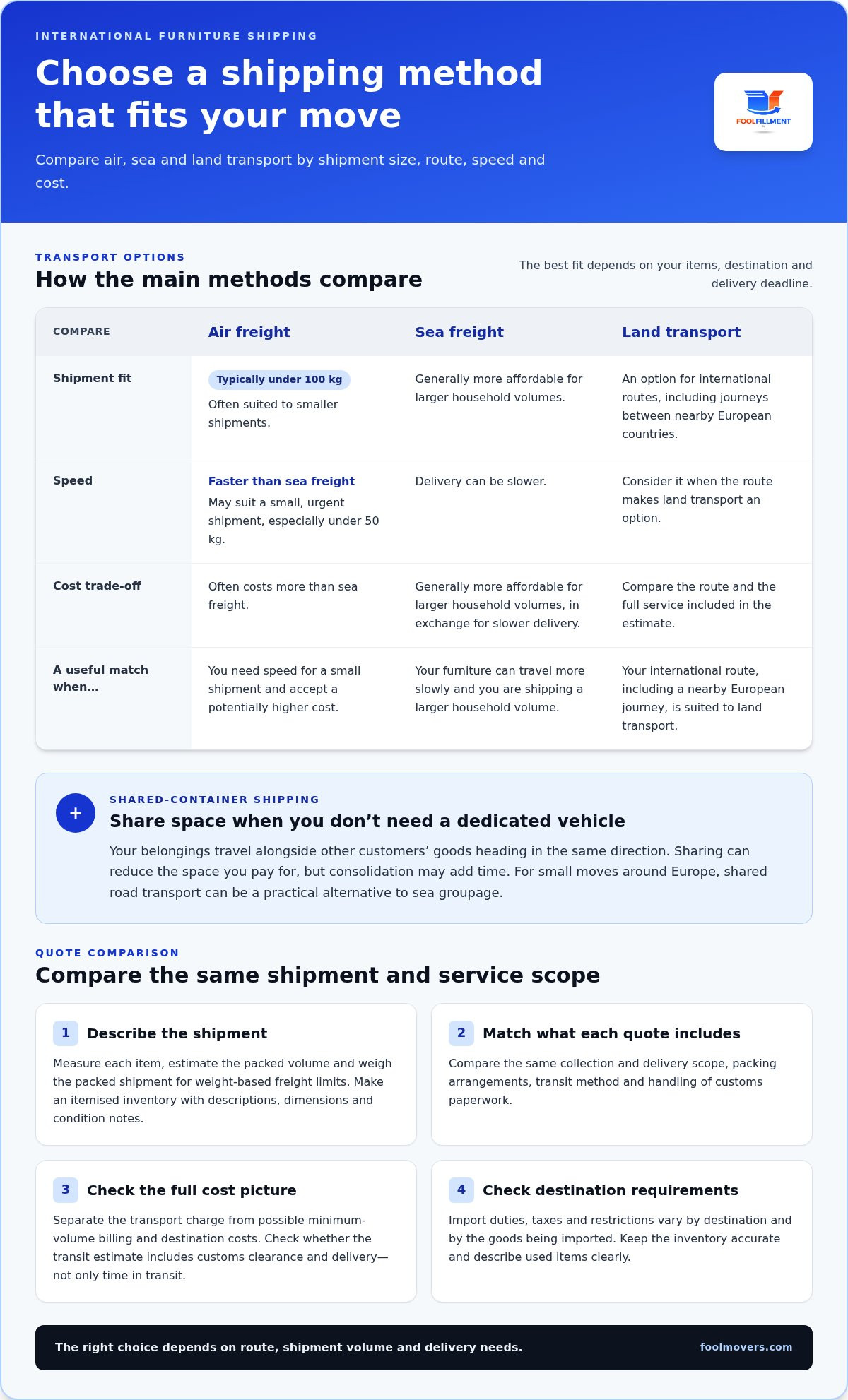
Choose shared transport when your belongings don’t need a dedicated vehicle and your schedule allows flexibility. Your items travel alongside other customers’ goods heading in the same direction. Check how the quote is calculated, what collection and delivery include, and how shared transport affects timing. For small moves around Europe, shared road transport can be a practical alternative to sea groupage.
-
Preparing Move Documents
Make an itemised inventory before packing: describe each piece, note its condition and record its dimensions. Keep your passport, moving paperwork and inventory together, then prepare any forms required for the destination. Label boxes clearly so their contents match the inventory. For electronics, record the make and model, back up your computer, and check whether the destination’s plugs and voltage are suitable before packing devices.
-
Planning and Comparing Shipping Costs
Measure each item and estimate the packed shipment volume before comparing quotes. Ask for the same collection and delivery scope, packing arrangements, transit method and handling of customs paperwork in each estimate. Separate the transport charge from possible minimum-volume billing and destination costs. A shared shipment can reduce the space you pay for, but consolidation may add time. The cheapest choice depends on route, volume and delivery needs.
-
Checking Destination Import Requirements
Check the destination country’s rules for used furniture, electronics and other household goods before the shipment leaves the Netherlands. Duties, taxes and import restrictions vary by destination and by the goods being imported, so there isn’t one rule that applies to every move. Keep your inventory accurate and describe used items clearly; don’t assume household belongings are automatically exempt from charges or restrictions.
For furniture and other belongings, Furniture & Other Items transport can bring collection and delivery into one moving plan.
Packing, insurance and shipment protection
Pack each item for its journey, not just for storage at home. A clear inventory, suitable materials and a plan for insurance help protect household belongings during relocation.
-
Choosing Self-Packing or Container Services
Choose self-packing if you can protect each item properly and want to reduce costs compared with an end-to-end moving service. For a full container, professional packing and loading can take up to 3 days, so factor that work into your move plan. Compare what packing support covers, and keep customs clearance paperwork separate from boxes. For fragile or valuable belongings, professional packing may be useful.
-
Securing Belongings for Shipment
Wrap furniture surfaces, protect corners and fill empty space so items can’t shift inside boxes. Use strong packing materials suited to each object, such as cushioning around glass or a protective cover for an upholstered chair. Make a detailed inventory with descriptions and condition notes before packing. That record can help you track possessions and support an insurance claim if an item is lost or damaged. Consider comprehensive insurance coverage for transit protection.
-
Planning Packing and Loading
Set a packing order: start with items you won’t need soon, then leave daily essentials until last. If you move abroad, pack clothes for the first few months and leave extras behind to save space. Keep passports, visas and other essential paperwork with you, not inside the shipment. Mark boxes by room and contents, and list fragile items clearly so their handling needs are visible during loading. Allow up to 3 days for professional packing and loading of a full container.
How can you choose a reliable international moving company?
Match the transport method to your items, destination and deadline. Then compare the mover’s options, pricing and process for handling international paperwork.
- Choose air, sea or land transport based on the route and shipment. Air freight is typically suited to shipments under 100 kg and is faster than sea freight, but often costs more. Sea freight is generally more affordable for larger household volumes, though delivery can be slower. Land transport is another option for international routes, including journeys between nearby European countries.
- Compare air and sea for the actual items you’re moving overseas. Air freight may make sense for a small, urgent shipment, especially if the goods weigh under 50 kg. For furniture that can travel more slowly, sea freight can be a practical alternative. Check whether the transit estimate includes customs clearance and delivery to your destination, not just time in transit.
- Decide what’s worth shipping before requesting quotes. List furniture and belongings you use, then consider their condition, replacement difficulty and fit with your destination’s climate and lifestyle. A bulky sofa that’s easy to replace may not justify the shipment space; a valued desk or keepsake may. Selling, donating or storing unwanted items can reduce the load and simplify your move.
- Assess a moving company’s international moving experience, network, services, reviews and accreditations. Compare its written quote with your inventory and route. Check how the mover handles collection, delivery, customs paperwork and communication about delays. Make sure the quote describes the same service level you need; comparing a basic transport estimate with a door-to-door service won’t show the true difference.
Comparing costs and minimum charges
Compare quotes using the same shipment details and service scope. Calculate packed volume by multiplying each item’s length, width and height, then add the results; weigh the packed shipment for weight-based freight limits.
-
Reviewing Sea Freight Time and Cost
Compare sea freight estimates against your destination and moving timeline. Groupage sea freight for small international moves can take 3 to 16 weeks, depending on destination. A typical minimum charge is 1 cubic metre, so a smaller shipment may still be billed at that volume. Check whether the quote includes collection, delivery, customs costs and other destination charges. Compare the full amount, not just the sea transport line.
-
Calculating Shipment Size and Weight
Measure every packed item at its widest, tallest and longest points. Multiply those dimensions to estimate its cubic volume, then total the figures for the shipment. Weigh packed boxes and furniture separately before adding their weights. These measurements help you compare freight limits and spot a minimum-volume charge. For example, a shipment measuring less than 1 cubic metre may still meet a 1 cubic metre sea-groupage billing minimum.
- Reduce moving costs by removing items that add volume but little value. Sell, donate or store belongings you won’t need abroad. Self-packing can cost less than an end-to-end moving service, provided you can pack items securely and prepare them for transport. Compare quotes using one inventory, the same destination and the same collection and delivery requirements. Check how a longer timeline affects shared freight options, and whether storage changes the overall plan.
For a quote based on your shipment and route, discuss your moving requirements.
Fool Movers: Home Removals
Fool Movers is a practical next step when you’re moving furniture or a few belongings across borders. Its Furniture & Other Items service fits smaller shipments, while Home Removals and Complete Relocation Solutions suit broader moving needs. If you’re comparing shared transport with a dedicated journey, use your item list, destination and timing to describe the move clearly. That makes it easier to focus the conversation on the shipment you actually have, whether it’s a single piece of furniture or several household items. For a move that includes a motorcycle or scooter, Fool Movers also handles that category. Get in touch with Fool Movers or visit Fool Movers online to discuss your move.
Make your next move easy to plan
The best way to move a few items to another country starts with one useful next step: turn your choices into a clear shipping brief. Note the pickup and delivery addresses, what you’re sending, its packed size, and any fragile or time-sensitive pieces. This gives you a practical basis for discussing the move instead of relying on rough estimates. Keep the brief with your inventory and destination paperwork, then update it if the shipment changes. Also decide who can receive the delivery and where the items can be placed.
Fool Movers offers Home Removals, Furniture & Other Items, and Motorcycles & Scooters, so you can discuss the service that matches what you’re moving. Share your route and item details to start a focused conversation about the next step. Contact Fool Movers about your move. A clear plan makes the journey ahead easier to organise.
Frequently Asked Questions
How much does it cost to move internationally?
International moving costs depend on the shipment’s size, route, transport method and service scope. To compare quotes, provide each mover with the same inventory, pickup and delivery addresses, and collection requirements. Check whether the estimate includes packing, customs handling, delivery and any minimum-volume charge. A quote based only on transport may leave out services you need, so compare the full journey before choosing.
How expensive is moving overseas?
The expense depends on what you take and how it travels. A few boxes may fit a courier shipment, while furniture may need shared freight or dedicated transport. Before planning a move abroad, compare the cost of shipping each bulky item with replacing it at your destination. Selling or storing pieces you can live without may reduce the shipment size and simplify your move.
How will you move your belongings to another country?
Choose transport that suits your belongings and destination, then organise collection, international transit and delivery. Prepare an inventory with clear descriptions, and set aside essential documents and items you’ll need immediately. For example, keep passports and medication with you rather than packing them with household goods. Check the destination’s import requirements before dispatch so restricted items don’t disrupt the shipment.
Can I airfreight items to arrive in advance?
Air freight can send essential belongings ahead of a slower household shipment. It may suit items you need soon, such as work equipment or a few personal essentials, while furniture travels separately. Pack the advance shipment as a separate consignment with its own inventory. Arrange who will receive it at the destination, and keep essential documents and daily-use items with you during the journey.
How Long Does a Small International Shipment Take?
The journey can take longer than the time spent in transit because collection, handling, customs clearance and final delivery all affect the schedule. Ask for an estimate covering the complete route from pickup to delivery, then plan around its stages rather than a single arrival date. Keep essential belongings accessible and avoid scheduling important appointments around an estimated delivery day.
How are products transported overseas?
Goods travel by land, sea or air, depending on the route, shipment size and delivery needs. A shipment may be collected, grouped with other consignments, moved internationally, cleared through customs and delivered to its destination. In a shared move, separate customers’ belongings travel together along a common route. Keep a copy of the inventory and shipment documents accessible throughout the move.
Disclaimer
Website & Blog Disclaimer
Last updated: September 2026
The information published on Foolmovers.com, including articles, guides, tips, FAQs and other editorial content, is provided for general information and guidance only.
Accuracy of Information
Foolmovers makes reasonable efforts to ensure that the information published on this website is accurate and useful at the time of publication. However, information can change without notice, particularly regarding customs procedures, import and export requirements, transport regulations, documentation, taxes, duties, prices, travel restrictions and local regulations.
We therefore cannot guarantee that all information will always be complete, accurate or current.
No Professional Advice
Information published on Foolmovers.com should not be regarded as legal, tax, financial, customs, immigration or other professional advice.
Every international move is different. Requirements may depend on the countries involved, your personal circumstances, residency status, the goods being transported and current legislation.
For important decisions, you should verify the latest requirements with the appropriate authorities or a suitably qualified professional.
Customs & International Moves
Customs regulations and documentation requirements can change and may be interpreted differently by authorities in different countries.
Although Foolmovers can assist customers with transport documentation and customs procedures where applicable, information provided in our articles does not constitute a guarantee that a shipment will be accepted, cleared or exempt from duties, taxes, inspections or additional charges.
Any customs duties, taxes, government charges or third-party fees remain subject to the applicable authorities and service providers unless expressly agreed otherwise.
Prices & Costs
Any prices, rates, fees or cost estimates mentioned in our articles are provided for general guidance unless explicitly stated otherwise.
Actual transport, storage, customs and related costs may vary according to route, volume, dates, availability, fuel prices, tolls and individual circumstances.
For an accurate moving price, please request a personalised quotation from Foolmovers.
Third-Party Websites
Our articles may contain links to external websites, authorities, businesses or other third-party resources.
These links are provided for convenience and additional information. Foolmovers does not control these websites and cannot accept responsibility for their availability, accuracy, content, security or privacy practices.
The inclusion of an external link does not necessarily mean that Foolmovers endorses the organisation, service or information concerned.
Limitation of Liability
To the extent permitted by applicable law, Foolmovers cannot accept liability for losses, damages, costs, delays or other consequences resulting from reliance solely on information published in our articles, guides or other general website content.
Nothing in this disclaimer excludes or limits liability where doing so would be prohibited by applicable law.
Your Individual Move
Information found in one of our articles may not apply exactly to your situation.
If you're planning a European move, contact Foolmovers directly. We can look at your specific route, volume, dates and requirements and provide information relevant to your move.
Foolmovers
Small European Moves, Done Right.


