


Furniture moves across Europe are commonly priced by the volume they take up, rather than by weight. When moving valuable items across Europe, consider how much space your furniture needs, the route, and whether packing or reassembly is part of the move. Keep personal documents and irreplaceable keepsakes separate from bulky belongings.
Moving between European countries takes planning, especially when treasured items or important documents are involved. Decide what should travel with you, what to include in the shipment, and how to protect each item along the way.
This guide explains what affects furniture transport, how to prepare documents and keepsakes, and how to decide which bulky belongings are worth moving. It also covers practical steps for cross-border moves, including customs documentation for destinations outside the EU.
Key Takeaways
- Build your furniture budget around shipment volume, route, and any packing or reassembly work. Taking furniture apart can reduce the space it needs.
- Protect documents and keepsakes in sturdy boxes, and photograph packed items so you have a clear record of what’s inside.
- Decide what deserves shipment space before packing bulky belongings. Keep essential medication with you during the move.
- Prepare for country-specific logistics: moves outside the EU require customs documents, and electronics and appliances should suit European voltage standards.
What Will it Cost to Move Furniture in Europe?
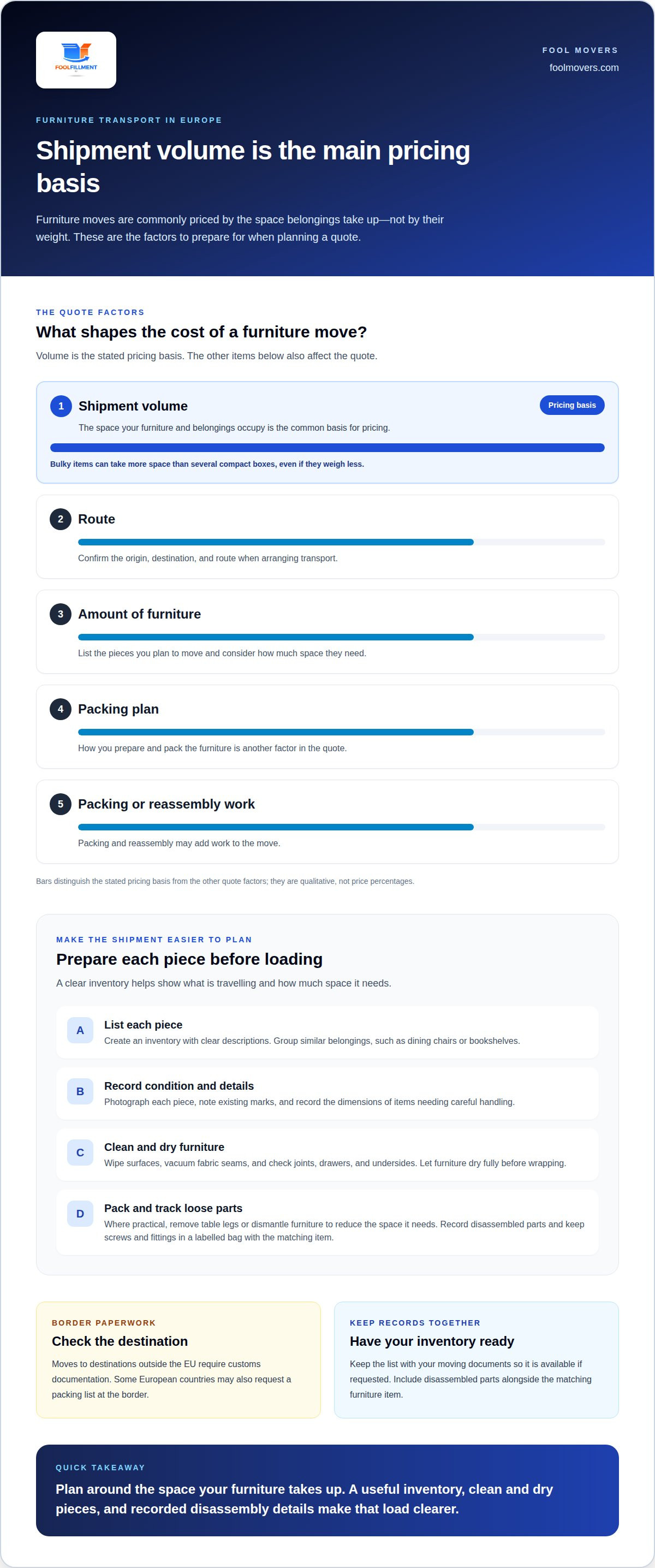
Furniture transport is commonly priced by shipment volume, not weight. A bulky armchair can take more space than several compact boxes, even if it weighs less. The route, the amount of furniture, and the packing plan all affect the quote. Packing or reassembly may also add work. Reduce the load by removing table legs or taking apart furniture where practical. For a move focused on household pieces, the furniture and other items page covers this type of transport.
Customs requirements depend on whether your destination is inside or outside the EU. Moves to destinations outside the EU require customs documentation, and some European countries may also request a packing list at the border. Before loading, create an inventory with clear descriptions and group similar belongings, such as dining chairs or bookshelves. Keep the list with your moving documents so it is ready if requested. For an EU-to-EU move, confirm the destination and route, then organise the transport paperwork for that journey.
Clean furniture before packing. Dirt, soil, or signs of insects can raise concerns during customs checks, and suspected pests may lead to belongings being quarantined. Wipe surfaces, vacuum fabric seams, and check joints, drawers, and undersides. Clean, dry furniture is easier to inspect, and drying it fully before wrapping helps prevent moisture from becoming trapped against wood or upholstery.
Follow a simple preparation sequence: list each piece, photograph its condition, clean it, and then pack it. Record disassembled parts, such as table legs, alongside the matching item. Set aside anything that needs careful handling, and note its dimensions. This makes your inventory more useful, clarifies the space required, and gives you a record to refer to when unpacking.
Packing personal documents, valuables and keepsakes
Separate important papers and sentimental belongings from furniture before packing. Keep essential documents within easy reach, and make a clear plan for protecting fragile items.
Packing Documents and Keepsakes
To move valuable items across Europe, pack them securely, keep personal documents with you, and record what is travelling. Put passports, certificates, and essential paperwork in a separate folder, not in a removal box. Wrap keepsakes individually and label each package clearly. Photograph items before packing to record their condition and make them easier to identify when unpacking.
Protecting Fragile and Valuable Belongings
Look for a European moving company that explicitly handles high-value belongings, such as antiques, and can explain how packing and transport are organised. Use sturdy moving boxes rather than ordinary cardboard boxes to help protect contents. Wrap glass, framed photographs, and ornaments separately, then cushion empty spaces so items don’t shift. Clean furniture before wrapping it, and let surfaces dry first to avoid trapping moisture against wood or fabric.
Packing Fragile Items and Boxes
Place heavier belongings at the bottom of each box and lighter, fragile items above them. Keep boxes manageable to lift, add padding between items, and label contents clearly. Rushed wrapping, weak boxes, and poor loading can leave valuables vulnerable to knocks or make them difficult to find after transport.
Choose between self-packing and company packing based on the time you have and how delicate the items are. If movers pack and unpack, photographs can help them identify what needs unpacking and document the expected result. Keep a simple inventory for valuable belongings, and match each photograph to an item or box. That record makes it easier to track what you packed and check each piece when it arrives.
Deciding whether to ship furniture and bulky belongings
Start with a room-by-room list of household belongings. Mark each item as essential, sentimental, replaceable, or rarely used. A dining table used daily may be worth transporting, while a damaged spare chair may not be. Consider each piece’s condition, size, and usefulness in your new home. Measure destination doorways and rooms too: a wardrobe that fits your current bedroom may not pass through a narrow hallway or fit upstairs.
Compare each item’s size with its practical value. Where possible, disassemble furniture: removing table legs can reduce the space it takes up and the risk of damage. Keep screws and fittings in a labelled bag with the matching item. Photograph the assembled piece and note existing marks. These steps make reassembly easier and help you decide whether bulky furniture is worth including.
For a move within Europe, match the transport method to distance and timing. Truck transport may suit a shorter route, especially when the load needs direct handling between homes. Sea freight can be a cheaper option for furniture, but it takes longer and may involve waiting at customs. That delay matters if you need a bed, desk, or table soon after arrival. Separate immediate essentials from pieces that can arrive later.
Use this quick decision check before finalising your household load:
- Keep: useful furniture in good condition, sentimental pieces, and items difficult to replace.
- Measure: large cabinets, sofas, and beds against the new home’s access points.
- Reduce: dismantle removable parts and leave behind damaged or rarely used pieces.
- Schedule: account for longer transit or customs waiting when choosing what to ship.
Group the belongings you are moving by room and mark anything you will need immediately. A compact, well-planned load keeps the focus on furniture that is useful in your new home.
Moving between European countries
A move from the Netherlands to Belgium has different practical details from a move to Switzerland. Write down your origin, destination, access arrangements, and delivery address. Then match the transport plan to the belongings you need. This route brief helps ensure essentials, such as a desk or bed, are not overlooked.
Sort belongings by when you will need them. Pack daily essentials separately from furniture that can arrive later. For example, keep work equipment and a change of clothes accessible while the dining table travels with the main load. Label boxes by destination room, not just by item type. “Kitchen, daily use” is more helpful on arrival than “miscellaneous.”
Before packing appliances, check whether each device is compatible with the destination’s voltage standards. Review the appliance label or documentation, particularly for equipment brought from outside Europe. List the devices you plan to take, such as a coffee machine, television, or desktop computer, so incompatible appliances do not take up valuable space.
Give your moving company a clear description of the route and shipment. Share both addresses, floor and access details, and information about large items that need careful handling. For destinations outside the EU, include customs documentation in your moving plan. An inventory can help keep the shipment organised; identify the destination country before preparing paperwork.
- Route: Record the Dutch collection address and the destination country.
- Access: Note stairs, narrow entrances, and parking arrangements at both homes.
- Appliances: Check voltage compatibility before adding devices to the load.
- Essentials: Keep immediate-use belongings separate from furniture arriving later.
A well-organised international move aligns the route, household inventory, and delivery priorities. Set out these details before collection so you can brief the moving company and plan for arrival day.
Fool Movers: Home Removals
Fool Movers helps with home removals when furniture and household belongings need to move between European countries. If your shipment includes a sofa, dining table, or other bulky pieces, its Furniture & Other Items service is relevant. You can also explore Complete Relocation Solutions when you need help planning a broader household move. For a motorcycle or scooter travelling with your belongings, Fool Movers handles that category too.
Before arranging transport, prepare a clear inventory, note the collection and delivery addresses, and identify items that need careful handling. This gives the move a practical starting point and helps match the service to what you’re transporting. Keep customs documents in your plan for destinations outside the EU.
Contact Fool Movers with your route and an estimate of the shipment’s volume to get a moving quote.
Plan the First Day in Your New Home
Before moving day, decide what you will need on your first evening, such as a kettle, bedding, work equipment, or a treasured photograph. Keep these priorities clear in your moving plan so you can unpack what matters first, rather than searching through boxes.
Moving valuable items across Europe is easier to manage when every decision has a place in that plan. Set aside time to organise your inventory, note special handling needs, and map out what should arrive first. If you’re ready to discuss your move, contact Fool Movers about your move.
A thoughtful plan gives you a clear next step and a calmer start in your new home.
Frequently Asked Questions
Moving within Europe?
Household goods can be moved between European countries by road, with the route and destination shaping the plan. Decide what should travel with you and what belongs in the shipment. Then provide collection and delivery details, including access notes such as stairs or restricted parking. Moves to destinations outside the EU also require customs documentation, so include this in your timeline.
What About Paperwork?
Prepare a clear shipment record and keep your moving documents together. Customs documentation is required for destinations outside the EU, and some European countries may request a packing list at the border. Use consistent descriptions, such as “wooden bookcase” rather than “miscellaneous furniture,” so you can match the paperwork to the goods.
What does international moving cost?
International moving costs depend on the distance, shipment size, and transport arrangement. Fool Movers’ dedicated long-distance removals start at €1.45 per kilometre. To understand the route’s cost, provide the origin and destination, plus an accurate description of the belongings and their approximate volume. A concise inventory helps distinguish a few bulky pieces from a larger household load and supports a clearer move plan.
Who will be transporting my moving goods?
Fool Movers provides an equipped van and a driver who helps with loading and unloading. Before collection, make sure the driver has both addresses and any access details that could affect arrival, such as stairs or a narrow entrance. Keep documents and personal essentials separate from the transported load. That way, you can access them without unpacking furniture or opening several boxes.
How much does it cost to ship valuables internationally within Europe?
The cost depends on the route and the space your belongings take up. A small painting or a few keepsakes may fit alongside other items, while large antiques can shape the shipment’s volume and handling plan. Describe valuable pieces clearly when planning transport. Include their dimensions and whether they need special positioning, so the load can be organised around their shape and fragility.
What insurance covers valuables during a move across Europe?
Check the terms of any insurance policy you hold, including which items are covered, declared-value limits, exclusions, excess, and packing conditions. Keep purchase records or appraisals for high-value pieces, along with dated photographs showing their condition before transport. Store these separately from the shipment. Do not assume an item is covered simply because it travels with your household goods.
Disclaimer
Website & Blog Disclaimer
Last updated: September 2026
The information published on Foolmovers.com, including articles, guides, tips, FAQs and other editorial content, is provided for general information and guidance only.
Accuracy of Information
Foolmovers makes reasonable efforts to ensure that the information published on this website is accurate and useful at the time of publication. However, information can change without notice, particularly regarding customs procedures, import and export requirements, transport regulations, documentation, taxes, duties, prices, travel restrictions and local regulations.
We therefore cannot guarantee that all information will always be complete, accurate or current.
No Professional Advice
Information published on Foolmovers.com should not be regarded as legal, tax, financial, customs, immigration or other professional advice.
Every international move is different. Requirements may depend on the countries involved, your personal circumstances, residency status, the goods being transported and current legislation.
For important decisions, you should verify the latest requirements with the appropriate authorities or a suitably qualified professional.
Customs & International Moves
Customs regulations and documentation requirements can change and may be interpreted differently by authorities in different countries.
Although Foolmovers can assist customers with transport documentation and customs procedures where applicable, information provided in our articles does not constitute a guarantee that a shipment will be accepted, cleared or exempt from duties, taxes, inspections or additional charges.
Any customs duties, taxes, government charges or third-party fees remain subject to the applicable authorities and service providers unless expressly agreed otherwise.
Prices & Costs
Any prices, rates, fees or cost estimates mentioned in our articles are provided for general guidance unless explicitly stated otherwise.
Actual transport, storage, customs and related costs may vary according to route, volume, dates, availability, fuel prices, tolls and individual circumstances.
For an accurate moving price, please request a personalised quotation from Foolmovers.
Third-Party Websites
Our articles may contain links to external websites, authorities, businesses or other third-party resources.
These links are provided for convenience and additional information. Foolmovers does not control these websites and cannot accept responsibility for their availability, accuracy, content, security or privacy practices.
The inclusion of an external link does not necessarily mean that Foolmovers endorses the organisation, service or information concerned.
Limitation of Liability
To the extent permitted by applicable law, Foolmovers cannot accept liability for losses, damages, costs, delays or other consequences resulting from reliance solely on information published in our articles, guides or other general website content.
Nothing in this disclaimer excludes or limits liability where doing so would be prohibited by applicable law.
Your Individual Move
Information found in one of our articles may not apply exactly to your situation.
If you're planning a European move, contact Foolmovers directly. We can look at your specific route, volume, dates and requirements and provide information relevant to your move.
Foolmovers
Small European Moves, Done Right.


