


A van carrying a small move may look simpler than a truck carrying a household, but the paperwork still covers two different things: your right to enter or live in Switzerland, and the clearance of your belongings. So, what documents do I need to move to Switzerland? The answer depends on your nationality, reason for moving and personal circumstances. Keeping the two document lists separate makes it easier to check each with the right authority.
Identity and residence documents aren’t the same as customs forms and an inventory for household goods. This guide separates the two, explains what to check and points you to the Swiss authority that can confirm requirements for your situation.
You’ll also find practical steps for preparing shipment details and asking about customs assistance. Use this checklist as a starting point, then confirm current forms, eligibility and deadlines with the relevant Swiss federal, cantonal or local authority.
Key Takeaways
- To answer “what documents do I need to move to Switzerland,” sort paperwork by purpose: personal entry, residence and household-goods customs clearance.
- Check current customs instructions with the Swiss Federal Office for Customs and Border Security before preparing forms or supporting evidence.
- Your identity and residence paperwork depends on your nationality and circumstances, so confirm requirements with the relevant Swiss authority.
- Before arranging transport, gather the shipment details your mover needs and ask what customs steps they can help you understand.
Essential Documents for Moving to Switzerland
Match each document to its purpose. If you’re asking, “what documents do I need to move to Switzerland?”, sort the answer into three groups: identity and entry, residence or registration, and customs clearance for household goods. The exact requirements depend on your nationality, circumstances and what you’re bringing.
For a broad overview of the immigration picture, see Immigration to Switzerland. For decisions about your own move, check the relevant official Swiss authority.
For a general introduction to residence and business considerations, watch this video:
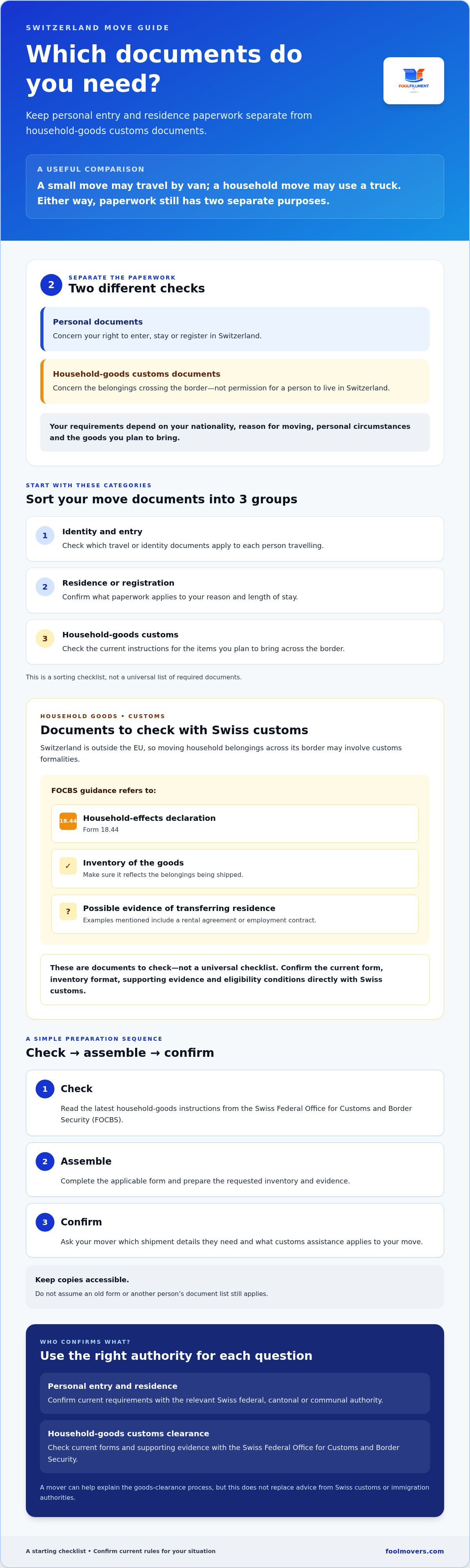
Personal residence paperwork relates to your right to enter, stay or register. Customs documents relate to household belongings crossing the border. Keep the lists separate so you can check each with the right authority.
Sort your move paperwork into three document groups
- Identity and entry: check which travel or identity documents apply to each person travelling.
- Residence or registration: confirm what paperwork applies to your reason and length of stay.
- Household-goods customs: check the current instructions for the items you plan to bring.
Use this as a sorting checklist, not a universal list of required documents. Requirements can vary by nationality, personal circumstances and the goods being moved.
What to check before relying on a checklist
Before booking transport or travelling, confirm current personal-entry and residence requirements with the relevant Swiss federal, cantonal or communal authority. Check household-goods forms and supporting evidence with the Swiss Federal Office for Customs and Border Security. A mover’s customs assistance can help you understand the goods-clearance process, but it isn’t immigration or legal advice.
Swiss customs documents for bringing household goods across the border
Switzerland is outside the EU, so moving household belongings across its border may involve customs formalities. This checklist is separate from your personal entry or residence documents. If you’re asking “what documents do I need to move to Switzerland?”, check the goods-clearance requirements with the Swiss Federal Office for Customs and Border Security, also called FOCBS, before relying on a general list.
Customs paperwork concerns the goods crossing the border, not permission for a person to live in Switzerland. Forms, evidence and eligibility can depend on your move and belongings, so confirm the current instructions for your situation.
Which household-goods documents may customs ask you to prepare?
FOCBS guidance refers to a household-effects declaration, Form 18.44, and an inventory of the goods. It may also ask for evidence that you’re transferring your residence, such as a rental agreement or employment contract. Treat these as documents to check, not a universal checklist. Confirm the current form, inventory format, supporting evidence and eligibility conditions directly with Swiss customs.
How to prepare your customs paperwork in a useful order
Keep the process simple and match each document to your move:
- Check: Read the latest household-goods instructions from FOCBS.
- Assemble: Complete the applicable form and prepare the requested inventory and evidence.
- Confirm: Ask your mover which shipment details they need and how customs assistance applies to your move.
Keep copies of the paperwork accessible and make sure the inventory reflects the belongings being shipped. Don’t assume an old form or another person’s document list still applies. If you’re arranging a home removal to Switzerland, you can ask Fool Movers which shipment information is needed to help with the customs process. This practical assistance doesn’t replace advice from Swiss customs or immigration authorities.
Personal documents for entering, registering and living in Switzerland
Your personal paperwork depends on your nationality, why you’re moving and how long you intend to stay. A document that applies to someone starting a job may not apply to someone moving for another reason. Before booking travel, check current entry and residence rules with the relevant Swiss federal authority, then confirm registration steps and deadlines with the canton or municipality where you plan to live.
Do your nationality and reason for moving change the documents?
Yes. Your circumstances can affect which identity documents, permissions or supporting papers you need. Use this comparison to organise your questions, not as a final document list.
Identity or travel documents
Check which valid passport or national identity document applies to you and anyone travelling with you. Confirm entry requirements for each person based on their nationality.
Residence or registration paperwork
Check what applies to your intended stay and reason for moving. Depending on your situation, authorities may ask about matters such as work or accommodation. Confirm required documents and timing directly with the relevant Swiss authority.
For the question “what documents do I need to move to Switzerland?”, start with your nationality and plans, then ask the appropriate Swiss authority for current requirements. Don’t assume a checklist written for another person or move covers your case.
Keep personal paperwork separate from customs forms
Personal documents support your entry, stay or registration. Customs forms and evidence relate to belongings crossing the border. Organise the two groups separately, with copies easy to find. Copies can help you manage your paperwork, but don’t assume they replace originals or meet an authority’s requirements. Check which versions to provide and whether originals are needed with the office handling your application or registration.
Before making travel or housing plans, confirm the applicable documents and deadlines with the Swiss federal and local authorities responsible for your situation. For questions about household-goods transport, ask your mover what shipment information they need. That help doesn’t replace immigration or legal advice.
How to prepare your Switzerland move documents and get customs help
Bring the paperwork together in a clear order. First, confirm personal entry and residence rules with the relevant Swiss authorities, then check household-goods requirements with the Swiss Federal Office for Customs and Border Security. If you’re still asking “what documents do I need to move to Switzerland?”, check the rules for your circumstances rather than relying on a general list.
- Verify: Check current official instructions, forms and deadlines for both your personal move and your belongings.
- Gather: Prepare the documents that apply to your situation and keep copies easy to access.
- Share: Give your mover the shipment details they request for customs assistance.
Questions to ask before your belongings travel
Ask your mover which shipment details they need and when to provide them. Confirm what customs assistance covers for your move, and which steps remain yours. Don’t assume the mover completes every personal customs form or handles immigration paperwork. Fool Movers can help customers understand customs processes for moves outside the EU, but this isn’t legal or immigration advice.
If you’re coordinating more than transport, explore Complete Relocation Solutions to see whether it fits your plans.
A final document check before moving day
Compare names, dates and other details across your documents with the current official instructions. Check that the shipment information you’ve shared matches the belongings being moved. Keep copies organised, but follow the authority’s directions on which versions to submit or present. You can also review the transport information for Home Removals as you prepare your move.
Still unsure what shipment information to prepare? Contact Fool Movers to discuss your move and the customs-document process. For personal entry or residence requirements, check directly with the relevant Swiss authority.
Get your Switzerland move documents ready
The clearest answer to “what documents do I need to move to Switzerland” starts with separating paperwork for you from paperwork for your belongings. Your identity, entry, residence and registration documents depend on your nationality and circumstances. Household-goods customs forms and supporting evidence follow a different process, so check current requirements with the relevant Swiss authorities before you travel or ship your items.
Once you’ve confirmed which rules apply, gather the documents you need, keep copies organised and ask your mover what shipment details they require. Fool Movers provides customs assistance for moves outside the EU, helping you understand the goods-clearance process. That’s practical moving support, not immigration or legal advice.
Fool Movers offers door-to-door removals for moves up to 12 m³, with real-time tracking and transparent pricing. Dedicated long-distance moves are priced at €1.45 per kilometre, while shared or part-load moves start at €0.80 per kilometre. Dedicated moves include up to four hours of driver assistance with loading and unloading. If you’d like to discuss your move and the customs paperwork involved, ask Fool Movers about your move and customs paperwork.
Take it one document group at a time. With the right checks and a clear plan, you can move forward with more confidence.
Frequently Asked Questions
Do I need customs documents to move household belongings to Switzerland?
Yes, moving household belongings to Switzerland can involve customs formalities because Switzerland is outside the EU. The exact paperwork depends on your circumstances and the goods in the shipment. Check the latest household-goods instructions from the Swiss Federal Office for Customs and Border Security before transport. Also ask your mover which shipment details they need and what customs assistance they can provide.
Can I bring my household goods into Switzerland without paying customs charges?
Some household goods may qualify for relief, but you shouldn’t assume every shipment does. Eligibility and required paperwork depend on current Swiss rules and your circumstances. Before transport, check the conditions, declaration forms and supporting evidence with the Swiss Federal Office for Customs and Border Security. Keep your inventory accurate and consistent with the official instructions, and ask the authority if your situation is unclear.
Do I need a visa or residence permit to move to Switzerland?
That depends on your nationality, reason for moving and personal circumstances. A customs declaration covers belongings, not your permission to enter or live in Switzerland. The answer to “what documents do I need to move to Switzerland” must come from current Swiss entry and residence guidance for your case. Check with the relevant Swiss federal authority, then confirm registration steps with the appropriate cantonal or local office.
What should an inventory for a move to Switzerland include?
Follow current Swiss customs instructions for the required inventory format and detail. Prepare an accurate account of the household goods being moved, and check that it matches the shipment. For example, don’t leave items off the inventory if they’re included in the load. Confirm with the Swiss Federal Office for Customs and Border Security whether your circumstances call for supporting evidence or additional forms before sharing paperwork with your mover.
Can a moving company help with Swiss customs paperwork?
A mover may explain the customs process and tell you which shipment details are needed for transport, but that isn’t immigration advice. Fool Movers offers customs assistance for moves outside the EU. Ask which support applies to your move, when to provide shipment information and which personal forms you must handle yourself. Confirm entry and residence requirements with official Swiss authorities, since a mover’s customs assistance doesn’t replace their guidance.
Disclaimer
Website & Blog Disclaimer
Last updated: September 2026
The information published on Foolmovers.com, including articles, guides, tips, FAQs and other editorial content, is provided for general information and guidance only.
Accuracy of Information
Foolmovers makes reasonable efforts to ensure that the information published on this website is accurate and useful at the time of publication. However, information can change without notice, particularly regarding customs procedures, import and export requirements, transport regulations, documentation, taxes, duties, prices, travel restrictions and local regulations.
We therefore cannot guarantee that all information will always be complete, accurate or current.
No Professional Advice
Information published on Foolmovers.com should not be regarded as legal, tax, financial, customs, immigration or other professional advice.
Every international move is different. Requirements may depend on the countries involved, your personal circumstances, residency status, the goods being transported and current legislation.
For important decisions, you should verify the latest requirements with the appropriate authorities or a suitably qualified professional.
Customs & International Moves
Customs regulations and documentation requirements can change and may be interpreted differently by authorities in different countries.
Although Foolmovers can assist customers with transport documentation and customs procedures where applicable, information provided in our articles does not constitute a guarantee that a shipment will be accepted, cleared or exempt from duties, taxes, inspections or additional charges.
Any customs duties, taxes, government charges or third-party fees remain subject to the applicable authorities and service providers unless expressly agreed otherwise.
Prices & Costs
Any prices, rates, fees or cost estimates mentioned in our articles are provided for general guidance unless explicitly stated otherwise.
Actual transport, storage, customs and related costs may vary according to route, volume, dates, availability, fuel prices, tolls and individual circumstances.
For an accurate moving price, please request a personalised quotation from Foolmovers.
Third-Party Websites
Our articles may contain links to external websites, authorities, businesses or other third-party resources.
These links are provided for convenience and additional information. Foolmovers does not control these websites and cannot accept responsibility for their availability, accuracy, content, security or privacy practices.
The inclusion of an external link does not necessarily mean that Foolmovers endorses the organisation, service or information concerned.
Limitation of Liability
To the extent permitted by applicable law, Foolmovers cannot accept liability for losses, damages, costs, delays or other consequences resulting from reliance solely on information published in our articles, guides or other general website content.
Nothing in this disclaimer excludes or limits liability where doing so would be prohibited by applicable law.
Your Individual Move
Information found in one of our articles may not apply exactly to your situation.
If you're planning a European move, contact Foolmovers directly. We can look at your specific route, volume, dates and requirements and provide information relevant to your move.
Foolmovers
Small European Moves, Done Right.


