


A dedicated van can be sealed after loading, with the seal number recorded on the consignment note (CMR). With dedicated van delivery Europe, your shipment travels in a vehicle assigned to it, rather than being combined with other customers’ goods.
A direct journey can suit businesses moving time-sensitive, fragile or confidential items, particularly when delivery must reach a specific address. It helps to understand what happens to your goods in transit and whether dedicated transport is worth choosing over shared space.
This guide explains how dedicated transport works, when it may suit your business and what information to provide when booking. It also covers the factors that affect costs, how to prepare a shipment and destinations served, including the Netherlands, Belgium, Germany, France, Spain, Denmark, Sweden, Norway, Luxembourg, Switzerland and Austria.
Key Takeaways
- Choose exclusive transport when a delivery window, reduced handling or keeping goods separate matters more than the lowest cost per shipment.
- Match the load to the vehicle: oversized, unusually heavy or difficult-to-load goods may need a different transport option.
- Prepare your quote request with both addresses, the goods’ dimensions and weight, package count, and when the shipment will be ready.
- Use the destination list to see whether your route is covered, then consider how collection and delivery details affect the plan.
For which companies is dedicated transport the optimal choice?
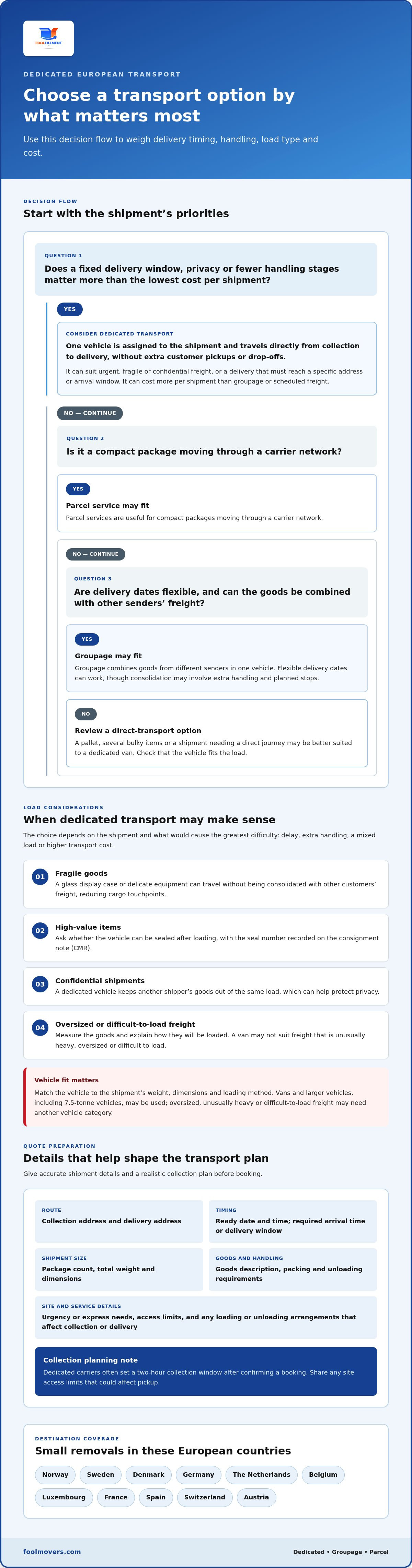
A production line waiting for a replacement part, a gallery sending a fragile sculpture or a business with a fixed unloading slot may need more control than shared transport offers. Dedicated transport assigns a vehicle to one shipment and carries it directly from collection to delivery. It can suit businesses that value timing, privacy or fewer handling stages over sharing vehicle space.
Groupage combines goods from different senders in one vehicle. It can work for shipments with flexible delivery dates, though consolidation may involve extra handling and planned stops. Parcel services are useful for compact packages moving through a carrier network. A pallet, several bulky items or a shipment that needs a direct journey may be better suited to a dedicated van.
Consider dedicated transport for these loads:
- Fragile goods: A glass display case or delicate equipment can travel without being consolidated with other customers’ freight, reducing cargo touchpoints.
- High-value items: For valuable stock or specialist equipment, ask for the vehicle to be sealed after loading and the seal number recorded on the consignment note.
- Confidential shipments: A dedicated vehicle keeps another shipper’s goods out of the same load, which can help protect privacy.
- Oversized goods: Measure the item and consider how it will be loaded. A van may not suit freight that is unusually heavy, oversized or difficult to load.
For a business delivery across Europe, direct routing can avoid the extra collections and drop-offs involved in shared transport. Fewer transfers also mean fewer handling points between pickup and the recipient’s address. Share the delivery window and unloading arrangements before booking, especially for a factory, port or restricted urban site with a fixed slot.
Dedicated transport can cost more per shipment than groupage or scheduled freight because one customer uses the vehicle. It is most useful when a delay, extra handling or mixed load would cause more difficulty than the higher transport cost. If your shipment is small, robust and flexible on timing, groupage or parcel delivery may be a better fit.
What Is Dedicated European Transport in Practice?
A dedicated vehicle carries one shipment or one customer’s load from collection to delivery, with direct routing and minimal handling. Customs clearance isn’t required for goods moving within the EU’s free circulation zone. UK-EU road shipments need customs formalities before departure. Route plans must account for legal driving hours, while cabotage and vehicle requirements depend on the route and operation.
Dedicated Vehicles and Direct Routing
A carrier assigns a specific vehicle to your freight instead of combining it with other customers’ shipments. The vehicle travels between the agreed collection and delivery points without extra customer pickups or drop-offs. This direct plan can suit urgent European freight, such as a production part needed to restart work or a time-sensitive import.
Before booking, provide the delivery address, required arrival window and unloading arrangements. A factory with a fixed unloading slot needs a different plan from a flexible warehouse delivery. Direct routing reduces transfers, but the schedule still needs to account for distance, route conditions and legal driving hours.
Vehicle Types and Load Capacities
The vehicle must fit the shipment’s weight, dimensions and loading method. Dedicated European courier work can use vans or larger vehicles, including 7.5-tonne vehicles. A 3.5-tonne air-ride van has also been requested for a dedicated delivery, showing how a specific vehicle setup can be matched to fragile freight.
Air-ride suspension can be relevant for delicate cargo, but it doesn’t make every item suitable for a van. Measure the longest and widest pieces, note the total weight and explain whether the goods need a pallet or special loading access. Oversized, unusually heavy or difficult-to-load freight may require another vehicle category.
Rules for Van Delivery in Europe
For an international shipment, distinguish customs requirements from cabotage, which concerns domestic transport within another country. Customs clearance isn’t required for goods moving within the EU’s free circulation zone. UK-EU road transport needs customs formalities before departure, and other destinations can involve different border procedures.
Cabotage conditions and vehicle requirements depend on the route and transport operation, so an international leg doesn’t automatically permit domestic work. Route planning must also account for legal driving hours and any relevant ferry or tunnel options. Share the full route, load details and delivery plan so the vehicle and journey can be planned together.
How to book a van for international delivery?
A clear quote starts with accurate shipment details and a realistic collection plan. Share the route, cargo information and required delivery time before booking.
Tailored International Delivery Quotes
For a tailored quote, provide the collection and delivery addresses, ready date and time, package count, weight, dimensions and goods description. For example, describe a boxed machine part by its measurements and weight, rather than simply calling it “equipment.” These details help match the vehicle to the load and shape the transport plan.
State whether the shipment is urgent or needs express handling, and give the recipient’s required arrival time. If a strict delivery window matters, include it in your first request. Dedicated carriers often set a two-hour collection window after confirming a booking, so share any site access limits that could affect pickup.
Consultation and Delivery Planning
Explain what the shipment contains, how it is packed and what is needed at unloading. A valuable or fragile item may need careful handling during loading, while palletised freight needs clear dimensions and access details. Mention delivery-site instructions, such as a named receiving area or limited unloading slot.
Once the details are clear, review the proposed collection window, route and delivery timing before accepting the booking. For urgent freight, state the consignee’s deadline when requesting transport, such as “10 am tomorrow.” That example is not a promise of availability; it shows why the required time belongs in the initial plan.
Before collection, make sure the goods are ready and the package count matches your request. Pack and label fragile shipments before the driver arrives to reduce handling time. Incomplete cargo details or uncertainty about readiness can delay the move, so send updates promptly if the load or schedule changes. Clear information gives your transport partner a workable plan from booking through delivery.
European destination coverage
Dedicated van delivery Europe connects a collection address with the shipment’s destination without routing it through a shared freight network. For businesses in the Netherlands, planning starts with the exact pickup and delivery locations, then accounts for border procedures and site access.
Small removals are offered in these countries:
- Norway, Sweden and Denmark
- Germany, the Netherlands, Belgium and Luxembourg
- France and Spain
- Switzerland and Austria
Routes can include journeys moving from major business hubs to destinations across the continent. Give the full town or postcode at each end, not just the country. The driver needs the precise destination to plan access, loading and unloading, especially at business sites with a designated receiving entrance.
Border planning depends on the route. Routes outside that zone can involve different procedures, so identify the goods and destination early. Border delays, strikes and seasonal demand can also affect delivery schedules across Europe.
Keep consignment details consistent from collection through delivery. Share the recipient’s address, contact details, opening hours and site instructions with your transport partner. If a delivery slot changes, pass on the update promptly so the driver can work from the latest plan.
For a cross-border shipment, ask for clear transit updates and agree how changes will be communicated. Dutch businesses sending goods to neighboring countries may have different route considerations from those shipping to non-EU destinations further north or south. The destination, border procedures and delivery-site access all shape the plan.
Before booking, match the shipment to the country list and prepare the collection and delivery details. Plan your European transport around the consignment, destination and required delivery arrangements with Fool Movers.
Fool Movers: Home Removals
Fool Movers handles small home removals and transports furniture and other items across Europe. If your business needs to move office furniture, equipment or other belongings, dedicated transport can keep the shipment on a direct journey. It can also suit a personal relocation involving a smaller load.
Fool Movers supports removals up to 12 m³, with a driver who helps load and unload. For a move that involves more than furniture, its Complete Relocation Solutions can bring the moving arrangements together. The right option depends on what you’re moving, the volume, and the collection and delivery locations.
Explore home removal services to see how they fit your move, or visit foolmovers.com to contact Fool Movers.
Make the Next Delivery Plan Work for You
Before arranging a shipment, decide what a successful delivery means for your business. A fixed receiving slot, careful handling or keeping a consignment separate can all shape the transport plan. Dedicated van delivery Europe may suit a company that values these requirements over combining its goods with other shipments.
Fool Movers supports Home Removals, Furniture & Other Items, and Motorcycles & Scooters. These options can help when your transport needs involve office furniture, household belongings or a motorcycle, rather than standard commercial freight alone. Share what you need to move and where it needs to go, then take the next step with a clear picture of your priorities.
Contact Fool Movers about your delivery to discuss the move. A well-prepared plan is a practical starting point, and you can take it one step at a time.
Frequently Asked Questions
Can the vehicle be sealed for transport?
Yes. Before collection, ask the carrier to seal the vehicle after loading and record the seal number on the consignment note. Give the recipient the reference so they can compare it at handover. This gives the receiving team a simple check, alongside inspecting the goods and noting any visible discrepancy when the vehicle arrives.
Do I have to fill the entire lorry to order exclusive transport?
No. Exclusive transport reserves the vehicle for your shipment, so the goods don’t need to fill it. The practical question is whether they fit the vehicle and can be loaded at both addresses. Provide exact dimensions and weight, especially for a bulky item, so the vehicle allocation matches the load.
How does it work?
Fool Movers includes driver help with loading and unloading, up to 4 hours, plus real-time tracking. For a smooth handover, have the goods accessible and tell the recipient who will receive them. If someone else is accepting delivery, share their name and the site’s access instructions beforehand. That helps avoid a delay at reception.
Is dedicated transport worth the cost?
Compare the quote with the business impact of a missed handoff, not just the transport cost. For example, if a technician is booked to install a replacement component, late arrival could mean another visit or delayed work. If the stock can wait and the delivery date is flexible, shared transport may make better business sense.
What is dedicated van delivery in Europe?
“Dedicated” describes how the vehicle is allocated, not a particular van model or a requirement to fill every available space. Your shipment has reserved vehicle space instead of sharing a load with other customers. This matters when goods need to remain separate or arrive directly at your business’s receiving address.
Which European countries and routes offer dedicated van delivery?
The destinations covered are listed in the section above. Routes are planned between the actual collection and delivery points, not by country name alone. Provide full addresses and access details, such as the correct warehouse entrance or receiving hours. This gives the driver useful information about where to collect and deliver.
Disclaimer
Website & Blog Disclaimer
Last updated: September 2026
The information published on Foolmovers.com, including articles, guides, tips, FAQs and other editorial content, is provided for general information and guidance only.
Accuracy of Information
Foolmovers makes reasonable efforts to ensure that the information published on this website is accurate and useful at the time of publication. However, information can change without notice, particularly regarding customs procedures, import and export requirements, transport regulations, documentation, taxes, duties, prices, travel restrictions and local regulations.
We therefore cannot guarantee that all information will always be complete, accurate or current.
No Professional Advice
Information published on Foolmovers.com should not be regarded as legal, tax, financial, customs, immigration or other professional advice.
Every international move is different. Requirements may depend on the countries involved, your personal circumstances, residency status, the goods being transported and current legislation.
For important decisions, you should verify the latest requirements with the appropriate authorities or a suitably qualified professional.
Customs & International Moves
Customs regulations and documentation requirements can change and may be interpreted differently by authorities in different countries.
Although Foolmovers can assist customers with transport documentation and customs procedures where applicable, information provided in our articles does not constitute a guarantee that a shipment will be accepted, cleared or exempt from duties, taxes, inspections or additional charges.
Any customs duties, taxes, government charges or third-party fees remain subject to the applicable authorities and service providers unless expressly agreed otherwise.
Prices & Costs
Any prices, rates, fees or cost estimates mentioned in our articles are provided for general guidance unless explicitly stated otherwise.
Actual transport, storage, customs and related costs may vary according to route, volume, dates, availability, fuel prices, tolls and individual circumstances.
For an accurate moving price, please request a personalised quotation from Foolmovers.
Third-Party Websites
Our articles may contain links to external websites, authorities, businesses or other third-party resources.
These links are provided for convenience and additional information. Foolmovers does not control these websites and cannot accept responsibility for their availability, accuracy, content, security or privacy practices.
The inclusion of an external link does not necessarily mean that Foolmovers endorses the organisation, service or information concerned.
Limitation of Liability
To the extent permitted by applicable law, Foolmovers cannot accept liability for losses, damages, costs, delays or other consequences resulting from reliance solely on information published in our articles, guides or other general website content.
Nothing in this disclaimer excludes or limits liability where doing so would be prohibited by applicable law.
Your Individual Move
Information found in one of our articles may not apply exactly to your situation.
If you're planning a European move, contact Foolmovers directly. We can look at your specific route, volume, dates and requirements and provide information relevant to your move.
Foolmovers
Small European Moves, Done Right.


