
Moving from Germany to the Netherlands is a logistics puzzle rather than a legal hurdle, yet many people still end up overpaying for a van and losing sleep over a nine-digit number. You're likely staring at a stack of boxes and wondering if the cost of moving from germany to netherlands is just one big trap for your bank account. It's frustrating to feel overwhelmed by logistics when you're only moving a few rooms of furniture across a border that doesn't even have a passport check.
This 2026 guide is your no-nonsense roadmap to handling your BSN registration within those first five days, setting up Dutch healthcare without the headache, and finding the most efficient way to transport your belongings. We'll skip the fluff and focus on what actually matters for your first week. You'll get a clear administrative timeline, a strategy for cost-effective transport, and the truth about 2026 health insurance premiums. If you're moving a small apartment, you don't need a massive corporate fleet. You just need a plan that works.
Key Takeaways
- EU freedom of movement simplifies your move, but you must register with the municipality within five days to receive your Citizen Service Number (BSN).
- Save money and avoid the DIY rental trap by choosing a specialized transport solution for moving from germany to netherlands that handles loads up to 12m³.
- Prioritize opening a Dutch bank account in your first 30 days to manage your rental deposit and employment needs efficiently.
- Use a two-week relocation checklist to handle your German Abmeldung and ensure your first week in the Netherlands is completely stress-free.
Crossing the Border: The Legal Reality of Moving from Germany to the Netherlands
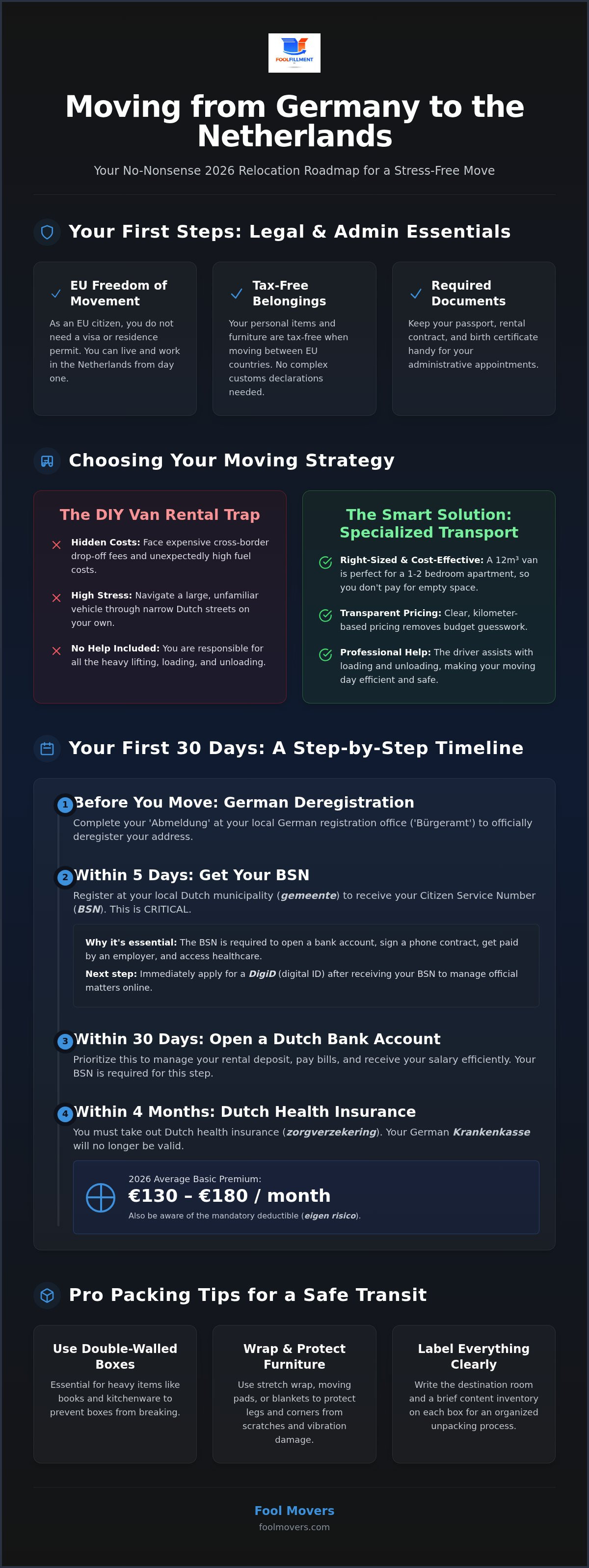
Crossing the border is the easiest part of your journey. As a German citizen, you don't need a visa or a residence permit to live in the Netherlands. You're protected by the Freedom of movement for workers, which means you can start a job the day you arrive. Since you're moving from germany to netherlands within the EU, your furniture and personal items are tax-free. Just keep your "Day 1" folder handy with your passport, rental contract, and birth certificate to avoid any administrative hiccups.
To better understand what your first few months will actually look like, watch this helpful video:
The BSN: Your Key to Dutch Life
Your first mission is getting a Burgerservicenummer (BSN). It's your unique social security number. You can't open a bank account, sign a phone contract, or get paid without it. If you're staying longer than four months, you must register at the local municipality (gemeente) within five days of arrival. Registration is free. The BSN is usually issued immediately at your appointment. Once you have it, apply for a DigiD right away. This digital ID is essential for managing taxes and healthcare online.
Health Insurance and Social Security
When moving from germany to netherlands, the healthcare transition is often the biggest culture shock. You can't keep your German Krankenkasse once you're a resident. You have exactly four months after registering to take out Dutch health insurance (zorgverzekering). For 2026, the average monthly premium for a basic package sits between €130 and €180. You'll also need to manage the "eigen risico," which is a mandatory deductible you pay before most coverage starts. It's different from the German system, but it ensures you're fully covered.
Transporting Your Belongings: Finding the Best Moving Strategy
Most people moving from germany to netherlands realize too late that they don't have enough stuff to fill a semi-truck. A standard 1-2 bedroom apartment usually fits into a 12m³ space. Don't pay for empty air in a massive commercial vehicle. A smaller van is faster, easier to park, and significantly cheaper. It's the practical choice for a modern relocation. For more administrative details on your arrival, check this practical guide to moving to the Netherlands.
Renting a van yourself sounds cheap until you see the fine print. You'll face cross-border drop-off fees, high fuel costs, and the stress of driving a large vehicle through narrow Dutch streets. Most rental companies don't include a helper, so you're on your own with that heavy sofa. Choosing a service with transparent, kilometer-based pricing removes the guesswork and the backache. It's a straightforward way to keep your budget under control.
The Man with a Van Advantage
A 12m³ van is the perfect middle ground. It's enough for your bed, desk, and dozens of boxes without being a nightmare to navigate. The real secret weapon is the driver. Having a professional who actually helps you load and unload makes the day move twice as fast. It turns a chaotic day into a managed process. You can learn more about our home removals service for small European loads.
Protecting Your Items During Transit
Pack tight and use plenty of blankets. The drive across the border is smooth, but vibration can damage unsecured furniture. Follow these basics for a safer trip:
- Use double-walled boxes for heavy items like books.
- Wrap furniture legs in stretch wrap or moving pads.
- Label every box with the room name and a brief inventory.
If you're moving antiques or delicate electronics, professional transport is safer than a DIY rental. Always check that your mover has cross-border insurance to cover your belongings. If you want to see how we can help your transition, get a quick quote today.
Settling In: The First 30 Days in the Netherlands
Once the boxes are inside, your first 30 days are about integrating into a system that's often more digital than what you're used to in Germany. The Dutch housing market is fast and expensive. Rent averages around €1,243 nationally, which is significantly higher than the German average of e 716. When signing your contract, you'll pay the 'Borg' (deposit), usually one or two months' rent. Opening a Dutch bank account is your next priority. You need a local IBAN for your salary and to set up utilities like internet and water without the usual German 'Papierkrieg'. Most providers handle everything online in minutes.
Transportation and Commuting
The Dutch transport system runs on the OV-chipkaart. It's a single card for trains, buses, and trams. If you're bringing your car when moving from germany to netherlands, you can often get a BPM (vehicle tax) exemption if it's part of your personal removal goods. However, you must still register the vehicle with the RDW, which costs approximately €242.10. Don't forget that the bicycle is king here. Buying a solid second-hand bike should be your first purchase to truly live like a local.
Cultural Adjustments: Germany vs. The Netherlands
Dutch social life revolves around 'Gezelligheid' and extreme directness. It's not rude; it's just efficient. In the office, you'll notice a shift from German hierarchy to the 'polder model' where everyone's opinion is heard before a decision is made. While almost everyone speaks perfect English, learning basic Dutch phrases earns you immediate respect. It shows you're here to stay, not just passing through. If you're still planning your transport strategy, get a transparent quote from us today.
Moving Day Checklist: A Stress-Free Transition
Your transition needs a clear timeline to avoid last-minute panic. Following a structured plan ensures moving from germany to netherlands feels like a simple trip rather than a logistical nightmare. Focus on these milestones:
- T-minus 2 weeks: Notify your local German Bürgeramt of your Abmeldung. You'll need this certificate to cancel your German insurance and utilities without paying extra fees.
- T-minus 1 week: Finalize your packing. Label boxes by room and ensure your 12m³ load is organized. This makes the unloading process twice as fast.
- Moving Day: Stay in close contact with your driver to coordinate the arrival time. Secure your new Dutch keys early and clear the hallway for a smooth transition.
- Post-Move: Visit the Gemeente to finalize your BRP registration and start celebrating your new life with a local 'borrel'.
Why Fool Movers is Your Best Partner
We focus on what matters: honest transport. Our transparent €0.80 (starting price for co load) per km pricing means you know exactly what you're paying before the engine starts. You won't find hidden "international surcharges" or surprise fees here. We specialize in small European removals, providing a driver who actively assists with the heavy lifting. We speak English, German, and Dutch, so communication is never a barrier. Discover why us is the preferred partner for small-scale relocations.
Final Pro-Tips for Expats
Managing the 'Abmeldung' process in Germany is non-negotiable. You need that paper to stop your German Krankenkasse payments and close bank accounts. In the Netherlands, remember to request the 'Uittreksel BRP' during your municipal appointment. This official document proves your address and is often required for local parking permits or job applications. It's the final piece of the administrative puzzle. Ready to move? Get a direct quote from Fool Movers today.
Ready to Start Your Dutch Adventure?
You've got the roadmap. Moving from germany to netherlands doesn't have to be a logistical nightmare or a budget-breaker. Remember to prioritize your BSN registration within those first five days and swap your German hierarchy for Dutch consensus. Focus on the small details like your Abmeldung and getting that first bicycle. If you're moving a small apartment or specific items, don't pay for a massive truck you won't fill.
We specialize in small loads up to 12m³ and keep things simple. Our transparent €0.80 per km pricing (starting price for co load) means no surprises on your final bill. Plus, you'll have a driver who actually helps with the heavy lifting on moving day. It's the most efficient way to cross the border without the typical expat stress. Book your stress-free small move with Fool Movers and let's get you settled. The Netherlands is waiting for you.
Frequently Asked Questions
Do I need a visa to move from Germany to the Netherlands?
No. As a German citizen, you're an EU national. You have the right to live and work in the Netherlands without a visa or residence permit. You just need a valid passport or ID card. This freedom of movement makes moving from germany to netherlands simpler than moving outside the EU. You only need to register with the local municipality if you're staying for more than four months.
How much does it cost to move a small apartment from Germany to the Netherlands?
We use a transparent kilometer-based pricing model starting from €0.80 (starting price for co load)per km. This approach prevents "quote shock" and ensures you only pay for the distance traveled. Since we specialize in small loads up to 12m³, you avoid the high costs of hiring a massive truck for a small volume. It's the most straightforward way to manage your relocation budget without any hidden surcharges.
How do I get a BSN (Citizen Service Number) after moving?
You receive your BSN immediately when you register at the local municipality (gemeente). You must make an appointment and visit them within five days of your arrival. This registration is free of charge. Bring your valid ID and your rental contract or proof of address. The BSN is essential for healthcare, banking, and starting a new job in your new home.
Can I bring my car from Germany to the Netherlands without paying tax?
Yes, you can often import your car as part of your "removal goods" to avoid the BPM tax. You must have owned and used the vehicle for at least six months before moving. While the exemption saves you from heavy taxes, you still need to register the car with the RDW. This process involves a technical assessment and vehicle identification to ensure your car meets Dutch safety standards.
What is the cheapest way to move furniture across the border?
The "Man with a Van" model is the most budget-friendly middle ground. It's cheaper than expensive full-service movers but less stressful than a DIY rental. Since our drivers provide physical assistance with loading and unloading, you don't need to hire extra help. Focusing on a 12m³ load ensures you get a professional service at a price that reflects the actual size of your move.
How long does it take to transport my belongings from Germany?
Transport usually happens on the same day or within 24 hours. Since we provide direct transport without stopping at hubs or warehouses, your items stay on the same van from door to door. This efficiency is a core part of moving from germany to netherlands with a small-load specialist. It minimizes the time you spend waiting for your furniture and allows you to settle into your new home immediately.


